
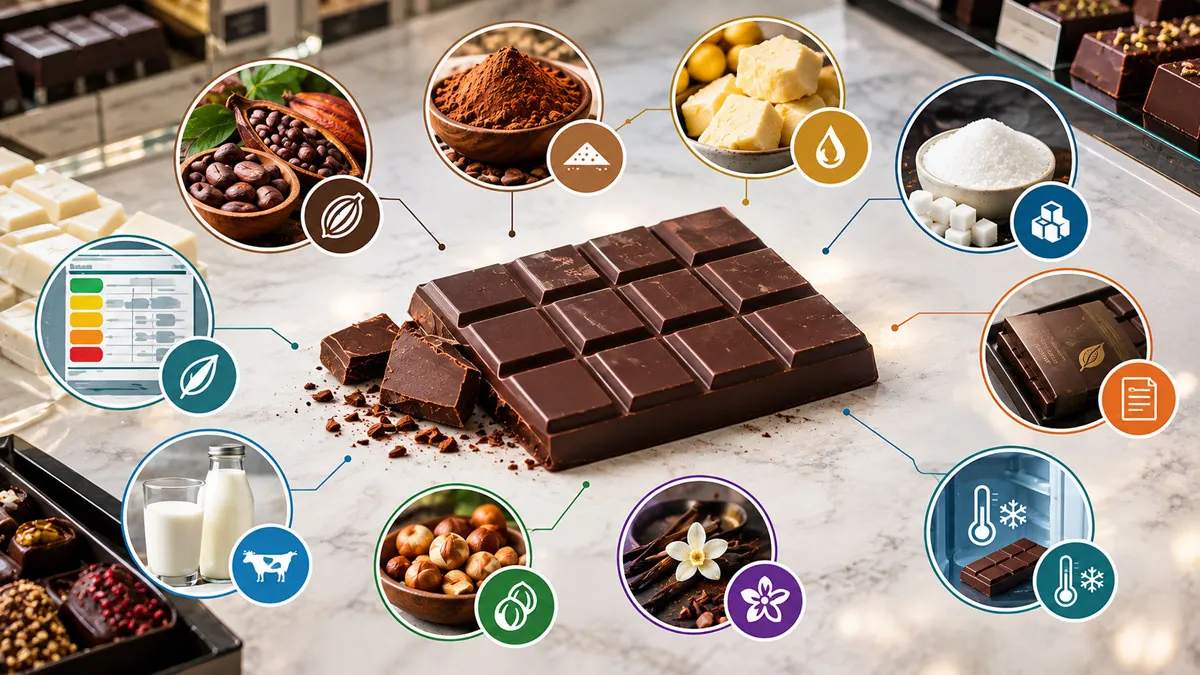
Choosing a chocolate bar is about more than picking a flavor or an attractive package. The ingredient list, cocoa percentage, type of fat, sugar , dietary information, and production claims can all tell you something useful about what you are buying. A few seconds spent reading the label can make it easier to compare products and select one that matches your taste, dietary needs, and .
1. Check The Cocoa Percentage
For dark chocolate in particular, the cocoa percentage is one of the clearest pieces of information on the package. It indicates the minimum proportion of cocoa in the chocolate portion of the product. A higher percentage generally means that there is less room for sugar and other ingredients, although it does not automatically mean that the chocolate will taste better.
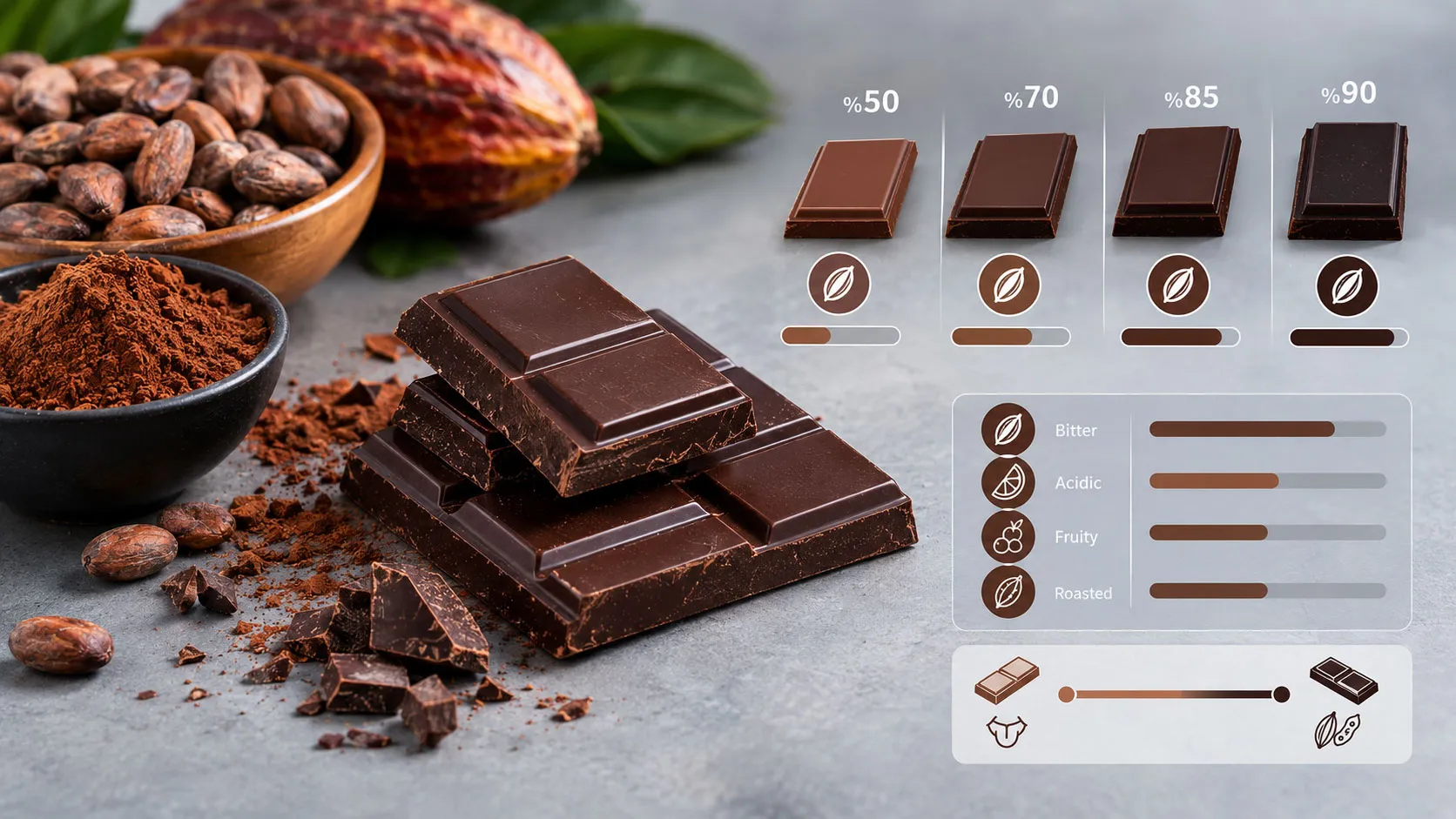
Higher-cocoa chocolate can have a more intense, bitter, acidic, fruity, or roasted flavor, depending on the cocoa and how it was processed. Lower percentages tend to produce a milder and sweeter profile.
It is therefore better to treat the percentage as a guide to composition and flavor intensity, rather than as a universal measure of quality.
2. Read The Ingredient List
The ingredient list provides more detail than the front of the package. Ingredients are generally listed in descending order by weight, so the first items make up the largest proportions of the product. This makes the list particularly useful when comparing similar chocolate bars.
A relatively simple chocolate may contain cocoa ingredients, sugar, cocoa butter, and, depending on the type, milk or other ingredients. Filled, flavored, or highly decorated chocolates can contain considerably more components.
- Look at which ingredients appear first.
- Check for milk, nuts, soy, or other allergens relevant to you.
- Notice added flavorings, fillings, and other ingredients that affect the product’s character.
- Compare ingredient lists between products rather than relying only on front-of-package claims.
Food-labeling guidance from French public authorities likewise emphasizes that ingredients are listed according to their weight and that allergens must be clearly identified.
3. Look At The Type Of Fat
Cocoa butter is the characteristic fat naturally associated with chocolate. Some chocolate products can also contain other vegetable fats. Their use is regulated in jurisdictions such as the European Union, and specific labeling requirements apply when permitted vegetable fats other than cocoa butter are added.
This distinction can be relevant when comparing traditional chocolate with products formulated for a particular texture, cost, or manufacturing purpose. The ingredient list is the most direct way to see which fats are actually present.
| What To Check | Why It Matters |
|---|---|
| Cocoa percentage | Helps indicate the proportion of cocoa and likely flavor intensity. |
| Cocoa butter | Shows the principal characteristic fat used in conventional chocolate. |
| Other vegetable fats | May indicate a different formulation and should be identified on the label where required. |
| Added ingredients | Can substantially change the nutritional profile, texture, and flavor. |
For products sold under regulated chocolate definitions, the exact rules can vary by market. Consequently, the safest approach is to read the product’s own ingredient declaration rather than assuming that a particular formulation applies everywhere.
4. Compare The Sugar And Nutrition Information
A high cocoa percentage does not by itself tell you how much sugar a product contains. Check the nutrition declaration to see the amount of sugars and energy per 100 grams, then consider the serving size if one is provided.
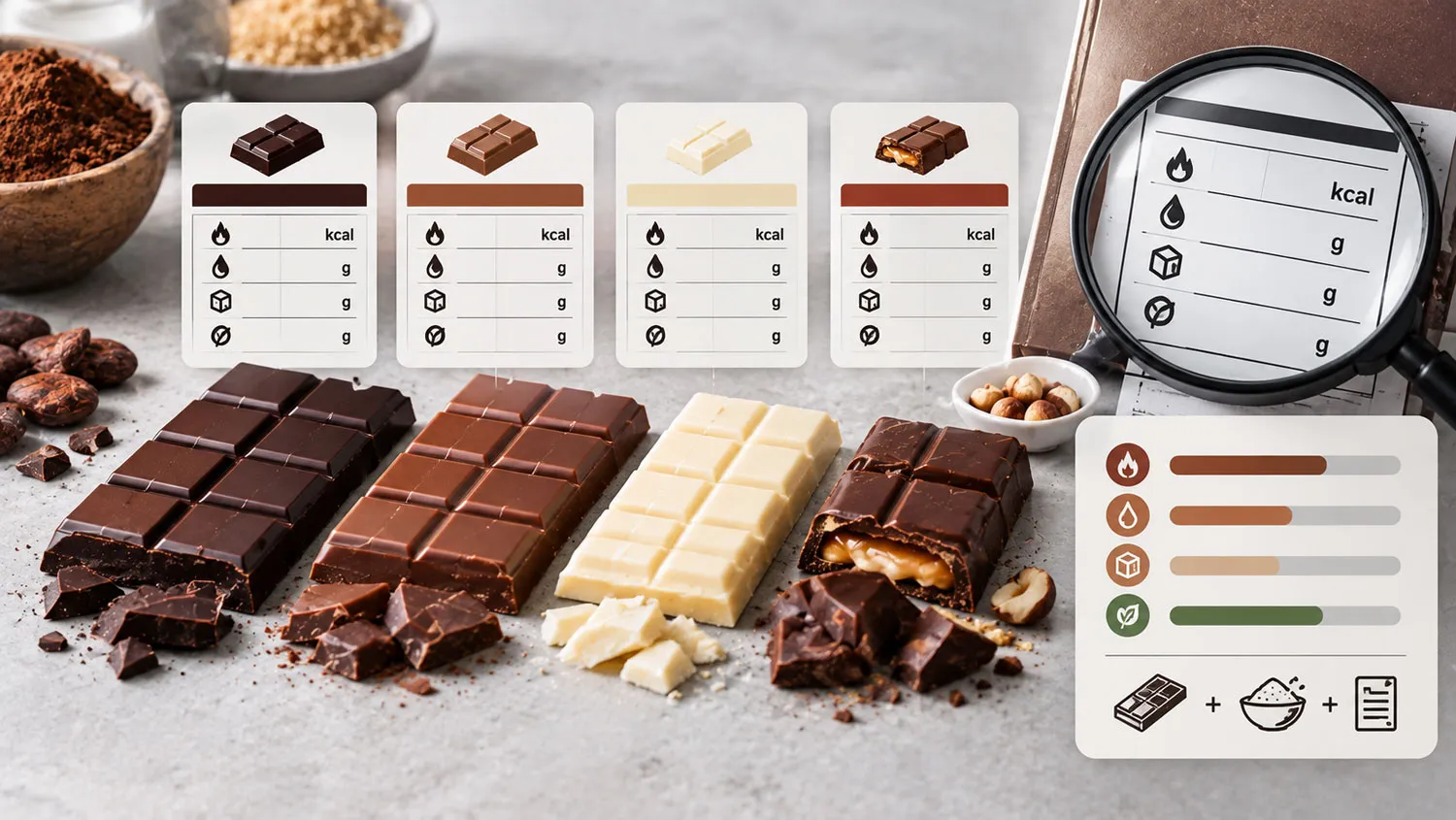
This is especially important when comparing dark chocolate with milk chocolate, filled chocolate, pralines, or bars containing caramel, biscuits, or other sweet ingredients. Two products with similar cocoa percentages can still have noticeably different nutritional profiles.
Nutrition information is best used alongside the ingredient list. Looking at only one of these can give an incomplete picture of the product.
5. Consider Allergens And Dietary Requirements
Chocolate may contain or come into contact with ingredients that matter to people with allergies or specific dietary requirements. Milk, soy, and tree nuts are particularly relevant to many chocolate products, while fillings and flavorings can introduce additional ingredients.
Do not rely solely on statements such as “dark chocolate” or “plant-based.” Read the complete ingredient and allergen information, including precautionary statements where present. Manufacturing conditions can also matter when avoiding an allergen.
If you have a medically diagnosed food allergy, the package information should be treated as the primary source for the specific product you are considering.
6. Examine The Product’s Claims Carefully
Words on the front of a package can attract attention, but they do not necessarily provide enough information to judge the whole product. Terms relating to origin, craftsmanship, organic production, sustainability, or special ingredients should be considered alongside the actual composition.
Independent or regulated certification can provide more useful information than an unqualified marketing phrase because certification normally involves defined criteria. However, the meaning of a particular label depends on its standard and scope.
It is also worth being cautious about health-related claims. Chocolate should not be selected on the assumption that it can prevent, treat, or cure a disease. Food-labeling rules restrict therapeutic claims, and the presence of cocoa does not turn a confectionery product into a medicine.
7. Consider Cocoa Origin And Sustainability Information
The origin of cocoa can be useful information for consumers interested in traceability and production practices. Some products identify a country or region, while others provide certification related to farming or fair-trade standards.
These details should be interpreted precisely. A sustainability logo does not necessarily describe every ingredient, every stage of production, or every environmental issue associated with the finished product. Check what the particular certification actually covers.
Environmental considerations can also extend beyond the cocoa itself. Life-cycle assessments of chocolate products take factors such as ingredients, processing, packaging, distribution, and consumption into account. This means that one feature on the package cannot describe the entire environmental footprint.
8. Check Freshness And Storage Information
Chocolate is relatively stable when stored appropriately, but heat, light, moisture, and unsuitable storage conditions can affect its appearance, texture, and flavor. Before buying, check the date information and look at the package for any specific storage instructions.
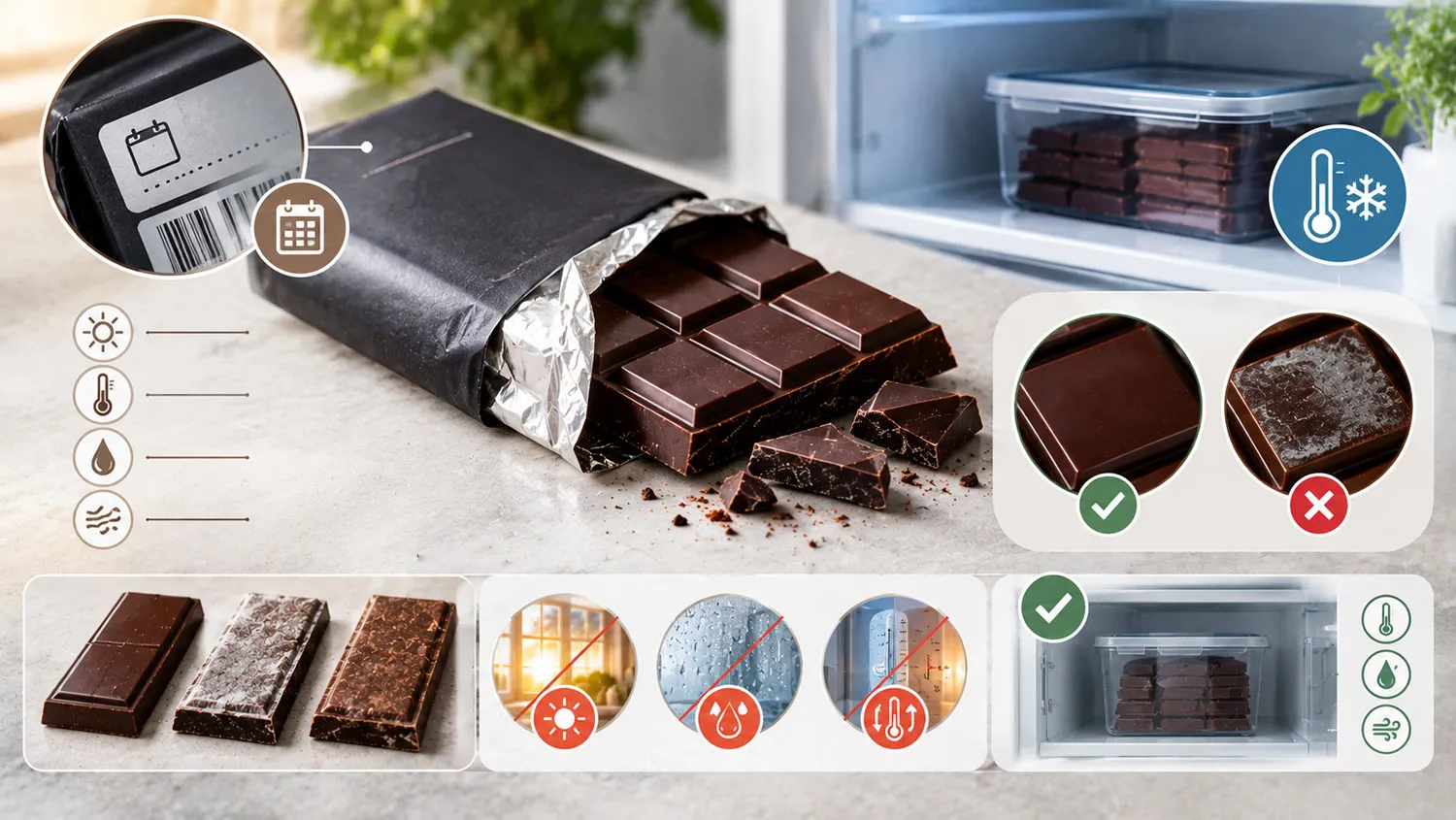
A pale or whitish surface does not necessarily mean that chocolate is unsafe. Fat or sugar can migrate to the surface under unsuitable temperature or humidity conditions, producing visible changes. These changes can affect quality and texture even when the product has been stored within its stated conditions.
At home, keeping chocolate away from direct sunlight and excessive heat helps preserve its sensory qualities. A cool, dry, stable environment is generally preferable to repeated temperature changes.
How To Compare Two Chocolate Bars Quickly
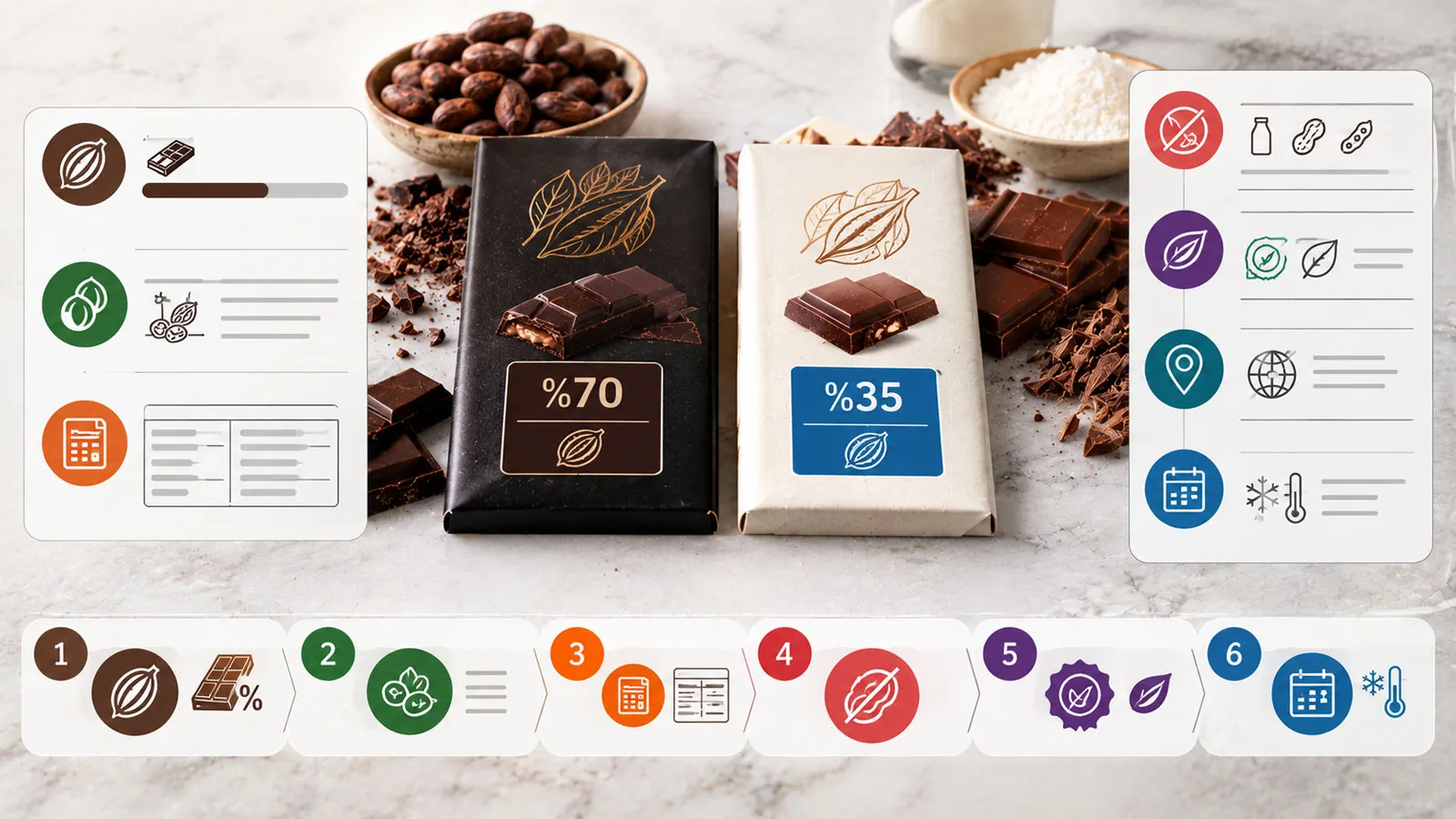
When two products look similar, a simple label comparison can make the decision easier. Start with the cocoa percentage, then examine the ingredient list and nutrition panel before checking any certification or origin information that matters to you.
- Compare the cocoa percentage.
- Read the ingredients from the first item onward.
- Check sugar and other nutrition information.
- Look for allergens and ingredients that do not fit your diet.
- Review claims about origin, certification, or production.
- Check the date and storage information.
The most useful choice depends on what you want from the chocolate. Someone seeking an intense cocoa flavor may focus on cocoa percentage and ingredient simplicity, while another shopper may place greater importance on sweetness, milk , allergens, origin, certification, or a particular filling.
The Main Details To Remember
Buying chocolate does not require complicated analysis. The package already contains much of the information needed to make a more informed comparison. Start with the cocoa percentage and ingredient list, then check nutrition, allergens, fats, claims, origin, and storage information.
Most importantly, do not treat one number, logo, or marketing phrase as a complete measure of quality. Chocolate is a broad category with substantial differences in composition and purpose, so the best way to compare products is to consider the information on the label as a whole.