
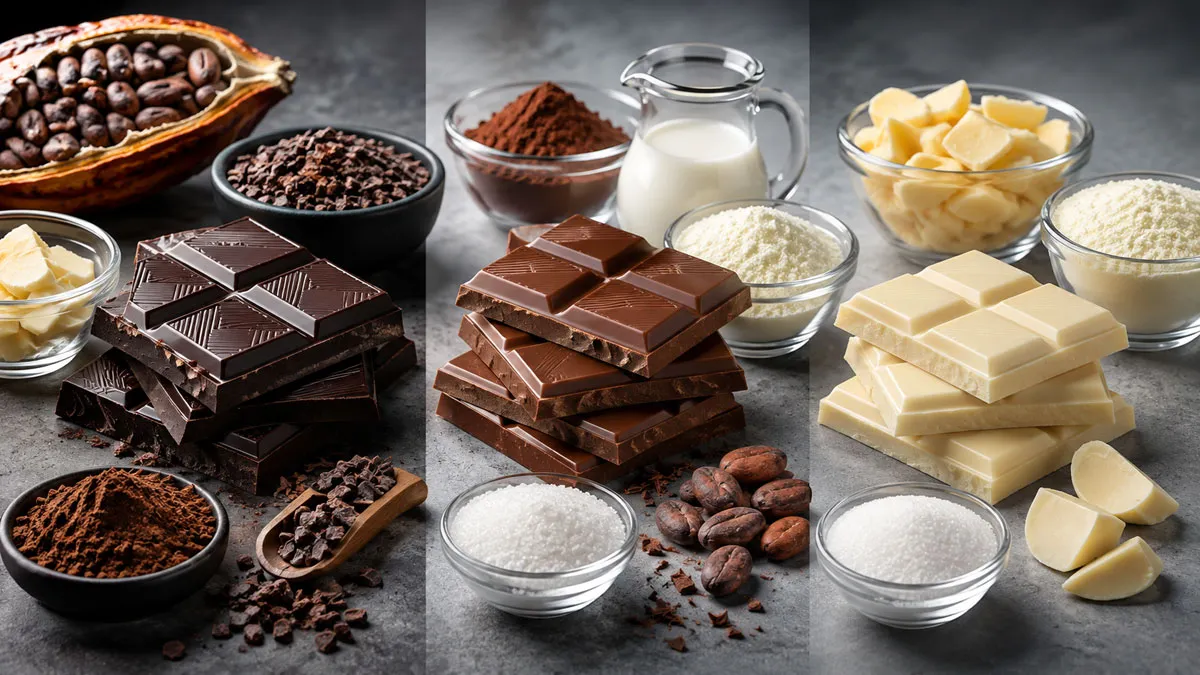
Chocolate begins with the seeds of the cacao fruit, but the familiar smooth bar is the result of several stages of processing and a carefully balanced mixture of ingredients. At its simplest, chocolate combines cocoa-derived ingredients with sugar, while many varieties also contain milk ingredients, additional cocoa butter, emulsifiers, flavorings, or other edible additions.
The exact recipe depends on the type of chocolate. Dark chocolate generally emphasizes cocoa solids and cocoa butter, milk chocolate adds milk ingredients, and white chocolate is based primarily on cocoa butter, sugar, and milk ingredients. Understanding these components makes it easier to see why different chocolates vary so much in color, flavor, texture, and sweetness.
The Main Ingredients In Chocolate
Although recipes differ between products, several ingredients form the foundation of most conventional chocolate.
| Ingredient | What It Contributes |
|---|---|
| Cocoa solids | Chocolate flavor, color, aroma, and many of its characteristic compounds |
| Cocoa butter | Richness, smooth texture, and the ability of chocolate to melt and set properly |
| Sugar | Sweetness and balance against cocoa’s natural bitterness |
| Milk ingredients | Creaminess, sweetness, and a softer milk flavor in milk and some white chocolates |
| Optional ingredients | Flavor, texture, or processing characteristics, depending on the recipe |
Cocoa Solids
Cocoa solids come from cacao beans after they have been fermented, dried, roasted, and processed. When roasted beans are broken and their shells are removed, the remaining pieces are called cocoa nibs. Grinding the nibs produces a thick material commonly known as cocoa mass or cocoa liquor.
Cocoa mass contains both the non-fat cocoa material and naturally occurring cocoa fat. When it is pressed, much of the fat can be separated as cocoa butter, leaving a solid cocoa cake that can be further ground into cocoa powder.
The non-fat portion is especially important for the characteristic taste and dark color associated with many types of chocolate. It contains numerous compounds that contribute to cocoa’s complex flavor and aroma.
Cocoa Butter
Cocoa butter is the naturally occurring fat obtained from cacao beans. It is an essential part of the texture of many chocolate products because it melts readily in the mouth while remaining solid at ordinary room temperatures.
Its physical properties also make it important during chocolate production. Properly controlled cooling allows cocoa butter to form a stable crystal structure, giving finished chocolate its firm texture and characteristic appearance.
Sugar
Sugar is added primarily to provide sweetness and reduce the perception of cocoa’s bitterness. The amount can vary substantially according to the style of chocolate and the manufacturer’s recipe.
Dark chocolate can contain relatively little added sugar compared with sweeter varieties, while some milk and confectionery chocolates contain considerably more. Sugar therefore affects not only sweetness but also the overall balance between cocoa flavor and other ingredients.
Milk Ingredients
Milk chocolate normally contains milk ingredients in addition to cocoa materials and sugar. These may include milk powder or other forms of concentrated milk solids. They contribute a creamy texture and a characteristic dairy flavor.
White chocolate also relies on milk ingredients, but its formulation is different from that of dark chocolate because it is based on cocoa butter rather than the darker non-fat cocoa solids responsible for much of traditional chocolate’s color and flavor.
How Cacao Beans Become Chocolate
The ingredients in a chocolate bar are only part of the story. Processing changes the cacao bean substantially before it becomes a finished product.
- Fermentation: Fresh cacao seeds are fermented after being removed from the fruit. This develops important flavor precursors.
- Drying: The fermented beans are dried to reduce moisture and prepare them for further processing.
- Roasting: Heat develops characteristic cocoa aromas and flavors while making the beans easier to process.
- Cracking and winnowing: The roasted beans are broken and their outer shells are removed, leaving cocoa nibs.
- Grinding: The nibs are finely ground into cocoa mass or cocoa liquor as their cocoa butter is released.
- Pressing: Some cocoa mass can be pressed to separate cocoa butter from cocoa solids, producing cocoa butter and cocoa cake.
- Mixing and refining: Cocoa materials are combined with ingredients such as sugar, cocoa butter, and milk ingredients according to the desired recipe.
- Conching and tempering: Further processing develops texture and flavor, while controlled crystallization of cocoa butter helps produce a stable finished chocolate.
What Different Types Of Chocolate Contain
The familiar categories of chocolate are distinguished largely by their proportions of cocoa materials, sugar, and milk ingredients.
Dark Chocolate
Dark chocolate generally contains cocoa materials, sugar, and cocoa butter, with no milk ingredients or only limited additions depending on the product. Its stronger cocoa character comes from a greater emphasis on cocoa-derived solids than in many sweeter chocolate varieties.
International food standards distinguish chocolate products by minimum amounts of cocoa components. For example, the Codex definition of chocolate specifies minimum levels of total cocoa solids, cocoa butter, and fat-free cocoa solids. Exact legal requirements can differ according to the product category and jurisdiction.
Milk Chocolate
Milk chocolate combines cocoa materials with sugar and milk ingredients. The milk softens the intensity of the cocoa flavor and contributes a creamy mouthfeel.
Because the balance between cocoa, milk, sugar, and cocoa butter can vary, two products both labeled as milk chocolate can have noticeably different flavors and textures.
White Chocolate
White chocolate is made primarily from cocoa butter, sugar, and milk ingredients. It does not have the same concentration of non-fat cocoa solids found in dark or milk chocolate, which explains its pale color and different flavor profile.
Cocoa butter is still a cocoa-derived ingredient, so the absence of dark cocoa solids does not mean that white chocolate contains no ingredient from the cacao bean.
Why Chocolate Recipes Include Other Ingredients
Not every chocolate product consists only of cocoa, sugar, and milk. Manufacturers may use additional ingredients to influence texture, flavor, stability, or the way chocolate behaves during production.
Common additions can include:
- Emulsifiers that help distribute ingredients and influence texture.
- Natural or other permitted flavoring substances.
- Nuts, fruit, or other edible ingredients in specialty chocolate products.
- Additional cocoa butter to adjust fluidity and texture.
The presence and amount of these ingredients depend on the particular product. A plain chocolate bar and a filled or nut-containing confectionery product therefore cannot be expected to have the same ingredient composition.
Is Cocoa Powder The Same As Chocolate?
No. Cocoa powder is a cocoa ingredient rather than simply another name for finished chocolate.
Cocoa beans can be ground into cocoa mass and then pressed to remove a substantial portion of the cocoa butter. The remaining cocoa cake can be pulverized into cocoa powder. Finished chocolate, by contrast, is formulated by combining cocoa-derived materials with other ingredients and processing the mixture to achieve a particular taste and texture.
This distinction explains why unsweetened cocoa powder can taste much more bitter and behave differently in recipes than a piece of chocolate.
What Gives Chocolate Its Texture And Flavor?
Chocolate’s characteristic experience comes from the interaction of its ingredients and its processing rather than from a single component.
Cocoa solids provide much of the characteristic cocoa flavor and color. Cocoa butter creates a smooth texture and contributes to the way chocolate melts. Sugar balances bitterness, while milk ingredients can add creaminess and a milder flavor.
Processing is equally important. Fermentation and roasting create or develop many of the flavor compounds associated with cocoa, while grinding, refining, conching, and tempering determine much of the final texture and physical behavior.
The Simple Answer
At its core, chocolate is a processed food made from cacao-derived materials, most importantly cocoa solids and cocoa butter, usually combined with sugar. Milk chocolate also contains milk ingredients, while white chocolate relies on cocoa butter, sugar, and milk ingredients without the dark cocoa solids characteristic of conventional chocolate.
So, although a chocolate bar may look like a simple finished product, its composition reflects two distinct elements: the components obtained from the cacao bean and the ingredients added to turn those components into a particular type of chocolate.