
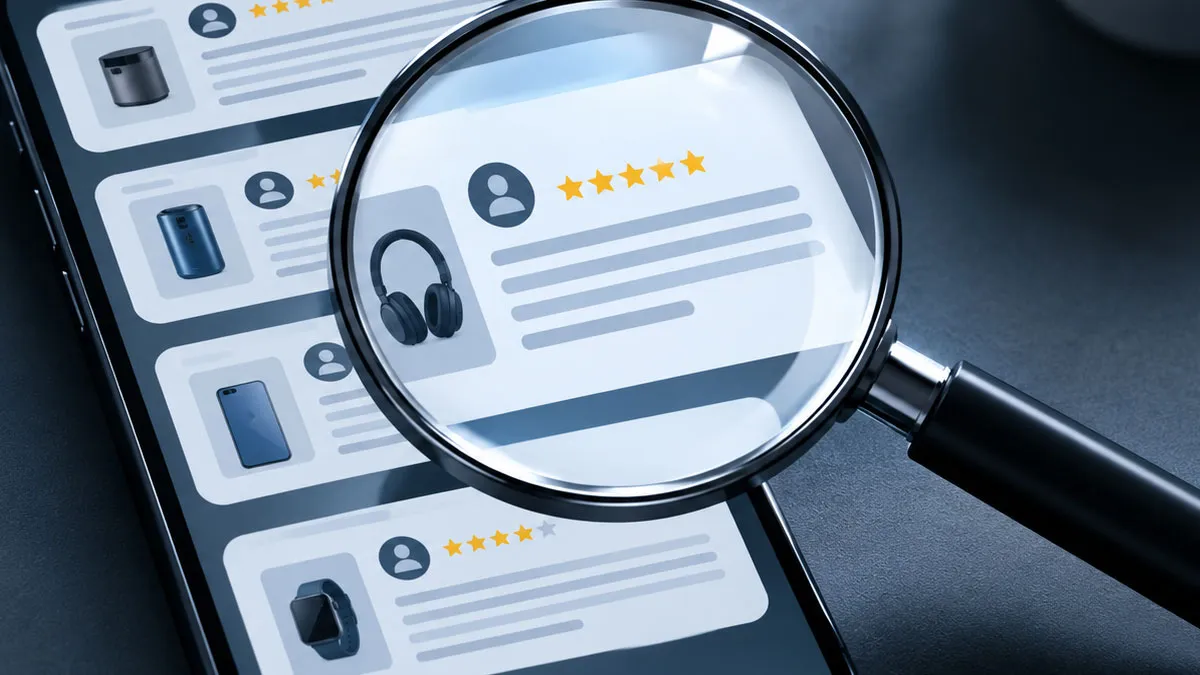
Online reviews can reveal a product’s strengths, weaknesses, and real-world performance. However, not every review reflects a genuine customer experience. Some sellers publish fabricated testimonials, pay for positive ratings, or manipulate feedback to make their products appear more popular than they are. These practices can mislead shoppers and make it harder to compare products fairly.
Learning to recognize suspicious patterns can help you make better purchasing decisions. The most reliable approach combines careful reading, reviewer history, rating patterns, and comparisons across independent platforms. No single clue proves that a review is fake, but several warning signs together deserve closer attention.
1. Look For Vague or Overly Promotional Language
Genuine reviews often describe specific experiences. A customer might explain how a kitchen appliance performs, how a pair of shoes fits, or how long a phone battery lasts during normal use. Fake reviews may rely on broad praise without explaining what the product actually does.
Watch for language that sounds more like an advertisement than a personal opinion. Phrases such as “the best product ever” or “perfect in every way” carry little weight when the reviewer offers no supporting details.
Pay attention to these warning signs:
- Generic praise: The review describes the product as excellent but gives no concrete examples.
- Sales language: The text repeats marketing claims or promotional slogans.
- Unnatural repetition: Several reviews use nearly identical phrases or sentence structures.
- Missing context: The reviewer says the product works well but never explains how or under what conditions.
Short reviews are not automatically fake. A real customer may leave a brief comment after a satisfactory purchase. Focus on the overall pattern rather than the length of an individual review.
2. Check The Reviewer’s History

A review becomes more useful when you can place it in context. Some shopping platforms display a reviewer’s previous contributions, purchase verification status, or other account details. These features can offer clues, although none guarantees authenticity.
Look For Consistent Reviewing Behavior
Check whether the account contains varied, detailed opinions or a long series of similarly enthusiastic reviews. An account that repeatedly praises unrelated products with almost identical wording deserves closer scrutiny.
Also look for reviews that appear disconnected from the product being discussed. A reviewer might mention features that the item does not have, describe a different model, or repeat information from the product listing without describing personal use.
Keep the limits of these clues in mind. New customers may have little review history, and enthusiastic shoppers may genuinely recommend many products. A limited profile alone does not establish deception.
3. Examine The Timing And Pattern Of Reviews
The timing of customer feedback can reveal unusual activity. A product that receives a large number of similar five-star reviews within a short period may deserve additional scrutiny, especially if the comments share wording or provide little practical detail.
Compare the dates of positive and negative reviews. A sudden wave of praise after a long period of limited activity may reflect a legitimate promotion, a product launch, or increased popularity. It may also indicate an attempt to influence the overall rating.
Look for combinations of warning signs rather than treating review volume as proof of fraud.
Understand What Rating Patterns Can Tell You
A product’s average rating summarizes customer scores, but it does not explain the quality or authenticity of the feedback. A high average may conceal recurring problems, while a lower average may reflect a genuine product that does not meet every buyer’s needs.
| Review Pattern | Possible Explanation | What To Check |
|---|---|---|
| Many similar reviews posted close together | A coordinated campaign or a genuine sales event | Compare wording, dates, and reviewer histories. |
| Repeated five-star praise with few details | Low-effort feedback or promotional reviews | Look for specific experiences and useful observations. |
| Several detailed complaints about one defect | A recurring product problem | Check whether different customers describe the same issue independently. |
| Large differences between review platforms | Different customer groups or possible rating manipulation | Compare review methods, sample sizes, and product versions. |
4. Compare Reviews Across Multiple Platforms
Do not rely entirely on the reviews displayed on a seller’s website. Check other retailers, independent review platforms, and specialist publications that test products directly. Different sources may reveal problems that are less visible on a single product page.
Look for consistent findings across independent reviewers. If customers repeatedly mention poor battery life, fragile materials, uncomfortable sizing, or unreliable software, those observations deserve attention.

However, multiple websites do not always mean multiple independent opinions. Retailers may display syndicated reviews, and several websites may repeat the same manufacturer-supplied information. Compare the actual rather than simply counting websites.
For a more balanced assessment, consider:
- Whether reviewers describe personal use rather than repeat product specifications.
- Whether the same strengths and weaknesses appear across independent sources.
- Whether negative feedback identifies specific, verifiable problems.
- Whether the reviews concern the exact model, size, version, or configuration you plan to buy.
5. Read Negative Reviews Carefully
Negative reviews often reveal practical limitations that promotional descriptions overlook. They may explain how a product performs after repeated use, whether its materials feel durable, or whether important features work as advertised.
Read the details rather than focusing only on the star rating. A complaint about a broken component may indicate a genuine quality issue. A low rating based entirely on delayed delivery may say more about the seller or carrier than the product itself.
Distinguish Useful Criticism From Unreliable Complaints
Useful negative reviews describe the problem, explain the circumstances, and identify its effect on the customer. They may include photographs, measurements, or details about how long the product was used.
Be cautious when several negative reviews use nearly identical language, attack a competing brand, or make serious claims without offering relevant details. Businesses can manipulate ratings in either direction, so fake criticism deserves the same scrutiny as fake praise.
A fair assessment considers both positive and negative feedback. Genuine products can disappoint some customers, and even excellent products can have occasional defects.
6. Check Verified Purchases And Reviewer Disclosures
Some platforms label reviews as verified purchases. This label can indicate that the platform has confirmed a transaction associated with the review. It is a useful signal, but it does not prove that the review is honest, unbiased, or based on extensive use.
Similarly, a review without a verified purchase label is not necessarily fake. The customer may have bought the product elsewhere or through a transaction the platform cannot confirm.
Pay attention to disclosures about free products, payments, discounts, affiliate relationships, or other connections between the reviewer and the seller. Such relationships can affect how readers interpret a recommendation.
A disclosed incentive does not automatically make a review false. The important questions are whether the reviewer actually experienced the product, whether the opinion is genuine, and whether the relationship is presented transparently.
7. Be Careful With AI-Generated Reviews
Artificial intelligence can produce fluent, convincing text that resembles a personal recommendation. This makes wording alone an unreliable way to determine whether a review reflects a genuine experience.
Some AI-generated reviews contain broad descriptions, repetitive structures, or polished language without meaningful details. Yet human writers can produce the same patterns, and genuine customers may also use AI tools to edit their writing.

Instead of trying to identify AI writing from style alone, look for evidence that the review reflects real product use. Check whether the reviewer describes specific results, mentions relevant limitations, and discusses features that match the exact item.
Be especially cautious when a review makes detailed claims that conflict with the manufacturer’s specifications or with consistent findings from independent product tests. The factual accuracy of the claims matters more than whether the wording sounds human.
8. Recognize Common Forms Of Review Manipulation
Fake reviews take several forms. Understanding the differences can make suspicious activity easier to recognize.
Fabricated Positive Reviews
A seller or third party may create reviews from nonexistent customers or people who never used the product. These reviews often aim to inflate ratings and create a misleading impression of customer satisfaction.
Incentivized Reviews With Biased Conditions
A reviewer may receive money, a free item, or another benefit in exchange for feedback. An incentive does not necessarily invalidate an honest review, particularly when the relationship is disclosed. However, an incentive tied specifically to a positive rating raises serious concerns about bias and deception.
Recycled Or Misattributed Reviews
Feedback from one product may appear on another product page, even when the items differ substantially. This can happen when ratings or comments are transferred between unrelated models, versions, or products. Check whether the review describes the exact item you intend to purchase.
Suppressed Negative Feedback
A product page can present a misleading picture when a seller hides legitimate criticism or highlights favorable reviews in a way that distorts the overall customer experience. Consider whether the visible feedback reflects a balanced range of opinions rather than a carefully selected collection of praise.
9. Use A Practical Checklist Before Buying
Before placing an order, take a few minutes to evaluate the available evidence. The following checklist brings the main warning signs together.
- Read several positive, neutral, and negative reviews.
- Look for specific details about product performance and everyday use.
- Check reviewer histories and available purchase verification labels.
- Examine review dates for unusual clusters or repeated wording.
- Compare findings across genuinely independent sources.
- Confirm that the feedback concerns the exact product model or version.
- Check for disclosures about payments, free products, or other incentives.
- Research the seller and review the product’s specifications, warranty, and return terms.
If several warning signs appear together, treat the reviews as uncertain rather than automatically dismissing the entire product. Look for stronger evidence before making a decision.
10. What To Do When You Find A Suspicious Review
If a review appears deceptive, use the platform’s reporting tools when available. Explain the specific concern, such as copied wording, an apparent mismatch between the review and the product, or evidence that the reviewer misrepresented their experience.
Avoid accusing a particular reviewer or seller of fraud based on a vague impression. Unusual wording, a new account, or an extremely positive rating does not prove misconduct.
When possible, base your purchasing decision on several independent sources and verifiable product information. For high-value purchases, prioritize hands-on testing from credible reviewers, clear warranty terms, and a seller with a reliable record of customer service.

Spotting fake product reviews requires more than checking star ratings or searching for suspicious phrases. The strongest approach combines reviewer history, review timing, specific product details, balanced criticism, transparent disclosures, and comparisons across independent sources.
No single sign can reliably separate every genuine review from every fake one. However, several consistent warning signs can reveal when customer feedback deserves less trust. By evaluating the evidence carefully, you can make more informed purchasing decisions and avoid relying on misleading praise or criticism.