
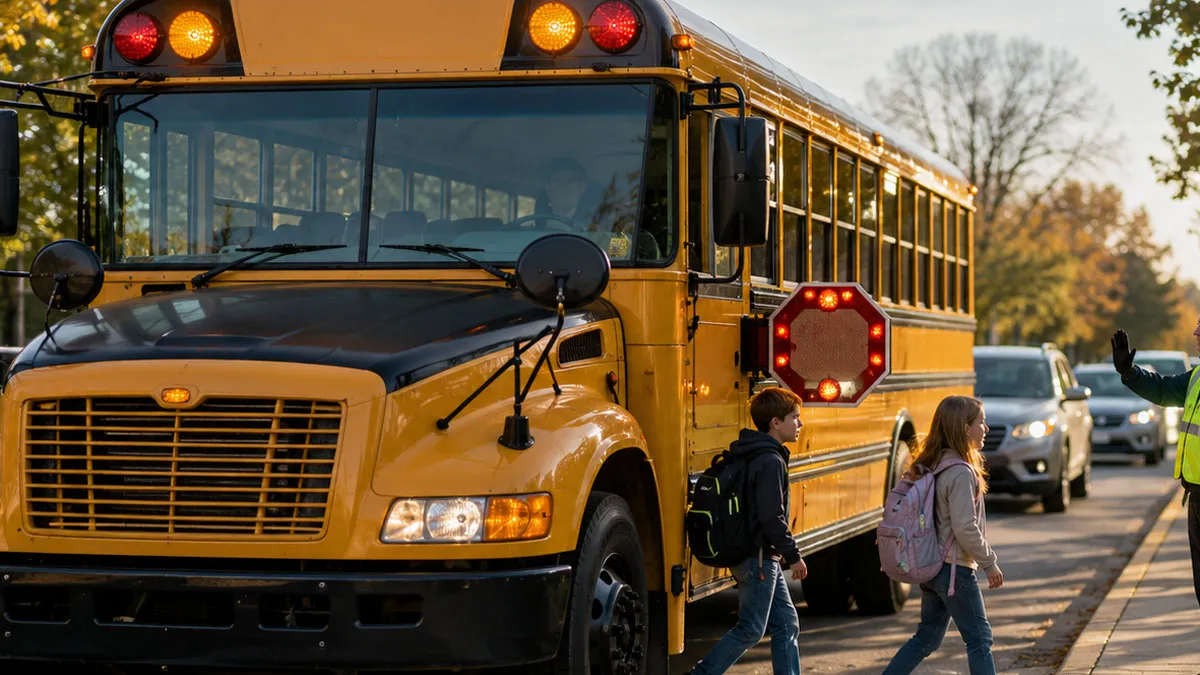
Getting children to and from school by bus combines ordinary public-road travel with additional safety considerations for young passengers. A school bus may be a dedicated vehicle or, depending on the transport system, a regular public bus used for school journeys. The safest operation depends on appropriate vehicle standards, responsible driving, orderly passenger behavior, and careful conduct around stops.
Although exact legal requirements differ between jurisdictions, the underlying safety principles are broadly consistent. Children should wait away from moving traffic, board without pushing, remain appropriately seated or securely supported during travel, follow the driver’s instructions, and take particular care when leaving the vehicle.
What A School Bus Is Used For
A school bus provides organized transportation between designated pickup points and educational facilities. It can reduce the need for individual car journeys and give children a structured way to travel to and from school.
The term does not always describe one particular vehicle design. Some transportation systems use buses dedicated primarily to students, while others use ordinary public-service buses on routes that carry large numbers of schoolchildren. The operating arrangements, vehicle equipment, passenger capacity, and legal requirements depend on the local transportation system.
Regardless of the vehicle type, the driver’s primary responsibility is to operate the bus safely and without unnecessary distraction. Passengers also have an important role because sudden movement, blocked aisles, or disruptive behavior can interfere with safe operation.
Why Safety Begins Before Boarding
Some of the most important safety decisions happen before a child enters the vehicle. A bus stop places children close to moving traffic, while the size of a bus can make it difficult for drivers to see pedestrians immediately around the vehicle.
Children should wait in a stable location away from the edge of the roadway and avoid playing, running, or pushing near the curb. They should approach the bus only after it has stopped and the boarding area is safe.
- Arrive with enough time to avoid rushing.
- Stay away from the road while waiting.
- Do not push or crowd other passengers while boarding.
- Keep bags and loose objects under control.
- Follow instructions from the driver or authorized supervisor.
These simple behaviors reduce the possibility of falls, conflicts between passengers, and accidental movement into the path of traffic.
Essential Safety Rules During The Journey
Once inside, passengers should move promptly to an appropriate seat or, where standing is permitted, maintain a secure handhold. The correct approach depends on the bus design and the rules governing that service.
Seat belts should always be used when they are provided and required. A belt helps keep a passenger in the intended seating position during sudden braking or a collision. Where standing passengers are permitted, they should hold an available support firmly and remain clear of doors and other restricted areas.
| Situation | Safer Practice |
|---|---|
| Waiting at the stop | Remain away from moving traffic and avoid rough play. |
| Boarding | Wait for the bus to stop and board calmly without pushing. |
| During travel | Remain seated or hold a designated support and keep aisles clear. |
| Using a seat belt | Fasten it whenever the vehicle provides and requires one. |
| Leaving the bus | Wait until the vehicle has stopped completely before standing or exiting. |
| Crossing the road afterward | Move to a place with a clear view and cross only when it is safe. |
Rules For Drivers And Other Road Users
School-bus safety is not limited to the passengers. Drivers approaching a stopped school bus need to recognize that children may be entering or leaving the vehicle and may behave unpredictably.
Specific traffic rules differ by jurisdiction, but many road systems impose additional precautions around buses stopped to load or unload passengers. Drivers may need to slow substantially, stop, or avoid overtaking depending on the circumstances and local law.
The safest general principle is straightforward: never assume that children are fully visible or that they will remain on the sidewalk. A driver should approach a school-bus stop cautiously and be prepared for pedestrians to appear around the vehicle.
Getting On And Off The Bus Safely
Boarding and leaving require particular attention because children are transitioning between a protected vehicle and an environment containing moving traffic.
Boarding
Children should wait until the bus has stopped before approaching the doors. They should enter one at a time, avoid pushing, and move far enough inside to prevent congestion near the entrance.
Backpacks and other belongings should not obstruct steps, aisles, emergency equipment, or other passengers. Keeping personal items under control is especially important when the bus is crowded.
Leaving The Bus
Passengers should remain seated until the bus has stopped completely and should exit calmly. After getting off, they should stay away from the roadway and avoid immediately moving around the front or rear of the bus.
A large bus can obstruct the view between a child and approaching vehicles. When a road must be crossed after leaving the bus, the child should wait until there is a clear and safe opportunity rather than stepping into traffic simply because the bus has stopped.
How Parents And Schools Can Support Safe Use
Children learn safe transport habits more effectively when adults demonstrate them consistently. Parents can practice the journey with younger children, including how to wait at the stop, board, find a safe position, and leave the vehicle.
Schools and transportation providers can reinforce these habits through clear instructions and practical safety training. Where appropriate, trained bus attendants or supervisors can also help coordinate boarding and exiting and reduce distractions for the driver.
Effective supervision should complement rather than replace basic passenger safety rules. Children should gradually develop the ability to recognize hazards and behave responsibly around buses and roads.
Common Misunderstandings About School-Bus Safety
A Bus Is Automatically Safe Because It Is Large
A larger vehicle can provide substantial protection for occupants, but size does not eliminate risks. Boarding areas, bus stops, road crossings, sudden braking, and passenger behavior remain important safety considerations.
A Stopped Bus Means The Road Is Safe To Cross
A stationary bus can actually make it harder to see approaching traffic. Children should not treat the presence of the bus as permission to enter the roadway. They need a clear view and a safe crossing opportunity.
Rules Are The Same Everywhere
School-transport regulations are not universal. Requirements concerning seat belts, standing passengers, vehicle markings, stopping procedures, supervision, and driver responsibilities can differ between countries and even between local transportation systems.
For that reason, general safety principles should be combined with the specific rules established by the local school, transportation provider, and traffic authority.
Key Principles To Remember
Safe school-bus use is based on a small number of consistent behaviors: careful waiting, orderly boarding, appropriate conduct during travel, and caution after leaving the vehicle. Drivers and other road users share responsibility for creating a safe environment around stops.
The most important habits are to stay away from moving traffic, avoid rushing, follow the driver’s instructions, use available safety restraints correctly, and never assume that a stopped bus makes the surrounding roadway safe. These principles remain useful even when the exact vehicle design and legal requirements differ from one transportation system to another.