
Few landscapes combine geology and human history as closely as Cappadocia in central Türkiye. Its most recognizable formations, commonly called fairy chimneys, rise from valleys in striking columns, cones, and pinnacles. Their appearance is unusual, but their real significance lies deeper: the formations are the product of volcanic materials with different resistance to erosion, shaped over long periods by water, wind, slopes, and drainage.
What makes the landscape particularly distinctive is the way this natural geology created spaces that people could later carve, adapt, and inhabit. Churches, dwellings, storage spaces, dovecotes, and underground settlements developed within the same broader landscape, giving Cappadocia an unusual combination of geological and cultural heritage. UNESCO recognizes the Göreme National Park and the Rock Sites of Cappadocia as a mixed natural and cultural World Heritage property.
How The Fairy Chimneys Formed
The foundations of Cappadocia’s landscape were established by volcanic activity. Eruptions from volcanoes including Erciyes, Hasan Dağı, and Göllüdağ produced extensive volcanic deposits. These materials included tuff and ignimbrite, relatively soft and porous rocks that became the principal material on which erosion later acted.
The process was not simply a matter of wind slowly sculpting the rocks. Research on Cappadocia shows that the development of fairy chimneys depends on several interacting factors, including the hardness, porosity, layering, slope, fractures, climate, and drainage characteristics of the volcanic formations. Water flowing down valley slopes is particularly important because concentrated runoff can cut deeply into relatively weak material.
Where harder rock overlies softer volcanic material, erosion can proceed unevenly. The more resistant upper material can protect the softer rock immediately beneath it, while surrounding material is removed. Over time, isolated columns develop, sometimes retaining a harder cap at the top. The exact formation of the cap can vary from one location to another; in some areas it consists of resistant volcanic layers, while other examples have developed beneath blocks that fell from harder rock surfaces.
The Role Of Water And Wind
Water is one of the most important forces behind the landscape. Rainfall and runoff exploit cracks and weaknesses in the volcanic deposits, gradually enlarging channels and valleys. Studies of Cappadocia’s drainage patterns show particularly high drainage density in the ignimbrite and tuff landscapes of the Göreme area, supporting the importance of water erosion in shaping the region’s badlands and fairy chimneys.
Wind also contributes to erosion, although it is more accurate to view it as one part of a larger system rather than the sole creator of the formations. The resulting landscape reflects the combined influence of rock properties, running water, wind, topography, and climatic conditions.
| Natural Factor | Role In The Landscape |
|---|---|
| Volcanic eruptions | Provided the tuff, ignimbrite, and other volcanic materials that form the geological foundation. |
| Rock resistance | Created differential erosion between harder and softer layers. |
| Rainfall and runoff | Cut channels and valleys through susceptible volcanic deposits. |
| Wind | Contributed to the gradual erosion and modification of exposed surfaces. |
| Topography and drainage | Controlled where water concentrated and how erosion progressed. |
Why Their Shapes Are So Unusual
Fairy chimneys are not produced from one uniform type of rock. Their distinctive forms emerge because different volcanic layers respond differently to erosion. The result can be narrow columns, broad pinnacles, conical bodies, and formations with prominent caps. Geological studies also show that the precise appearance of a fairy chimney can depend on local slope conditions and the characteristics of the underlying ignimbrite.
This explains why the formations are visually varied even within the same region. Their shapes are effectively records of the local interaction between geology and erosion. A small change in rock resistance, bedding, slope, or drainage can influence the way a formation develops.
A Landscape Shaped By Differential Erosion
The central idea is differential erosion: materials that resist weathering remain while weaker materials are removed more quickly. In Cappadocia, this process has produced not only isolated fairy chimneys but also valleys, ridges, cliffs, and extensive badlands. The formations therefore make sense as part of a much larger geomorphological system rather than as isolated geological curiosities.
How People Used The Same Rock Landscape
Cappadocia’s uniqueness does not end with its geology. The volcanic rocks that are difficult to erode naturally can nevertheless be workable enough in suitable locations for people to carve into them. Research on the region’s rock-cut structures notes that tuff and ignimbrite provided favorable conditions for excavation and offered useful thermal insulation.
Over centuries, people adapted the landscape for different purposes. Rock-cut churches and other spaces became integrated into the valleys, while underground settlements and other excavated structures added another dimension to the region’s cultural landscape. The official Turkish cultural heritage description identifies churches, underground cities, rock-cut spaces, dovecotes, and traditional architecture among Cappadocia’s significant features.
- Rock-cut churches and chapels were incorporated into the volcanic landscape.
- Underground settlements made use of the region’s distinctive geological conditions.
- Rock-cut storage spaces benefited from the properties of tuff and ignimbrite.
- Dovecotes and other structures were integrated into cliffs and valley walls.
What Makes Cappadocia Different From Other Fairy Chimney Landscapes
Fairy-chimney-like formations are not exclusive to Cappadocia. Similar erosional structures can occur wherever suitable volcanic or sedimentary materials are exposed to erosion. What distinguishes Cappadocia is the scale and combination of features: extensive volcanic landscapes, deeply eroded valleys, abundant fairy chimneys, rock-cut architecture, and underground settlements occur within a closely connected cultural landscape.
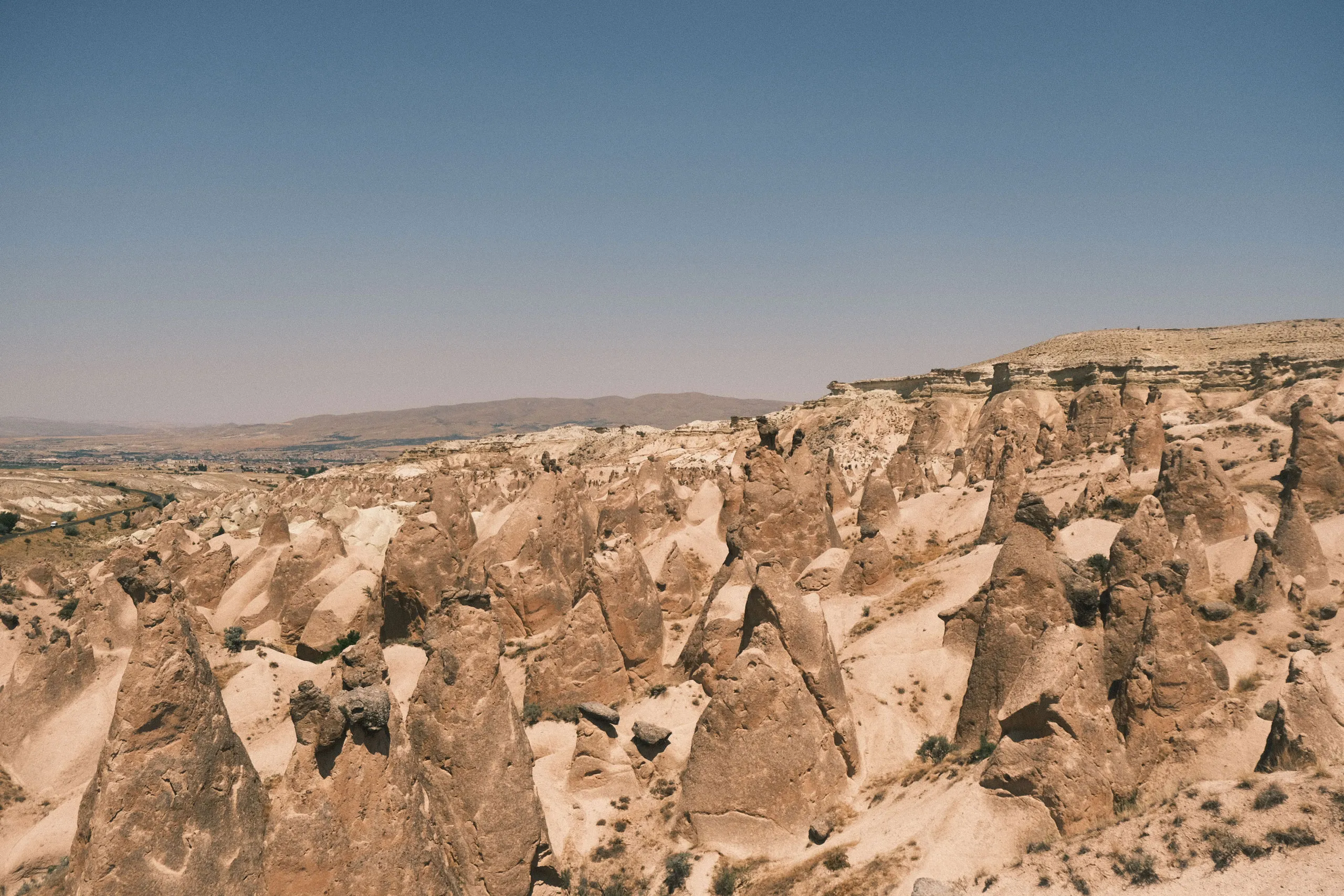
The regional geology also varies considerably. Research into Cappadocia’s lithological structure describes a broad volcanic province while distinguishing the central area where fairy chimneys, deep valleys, and other characteristic erosional features are especially widespread. This helps explain why the name Cappadocia can refer to a broader geographical and cultural region while the most famous fairy-chimney landscapes are concentrated in particular parts of it.
Why Cappadocia Has World Heritage Significance
The importance of Cappadocia comes from the interaction between its natural and cultural characteristics. Göreme National Park and the Rock Sites of Cappadocia were inscribed on the UNESCO World Heritage List in 1985. The property combines a distinctive volcanic landscape with rock-hewn churches and other cultural features that developed within it.
The fairy chimneys are therefore only one part of a much broader story. Their unusual forms demonstrate how volcanic deposits can be transformed by erosion, while the surrounding rock-cut heritage demonstrates how people adapted to that geological environment. The result is a landscape in which natural processes and human history are physically intertwined.
The Lasting Significance Of The Fairy Chimneys
Cappadocia’s fairy chimneys are unique not because they were created by a single extraordinary force, but because several processes and circumstances came together. Volcanic activity supplied the raw material; differences in rock resistance created the conditions for differential erosion; water and wind progressively sculpted the terrain; and people later transformed parts of the resulting landscape for habitation, worship, storage, and other purposes.
Their enduring appeal comes from this combination. Seen only as unusual rock formations, the fairy chimneys are impressive. Understood as the visible result of a long geological process and as part of a landscape shaped by human use, they reveal why Cappadocia holds an exceptional place among the world’s natural and cultural landscapes.