
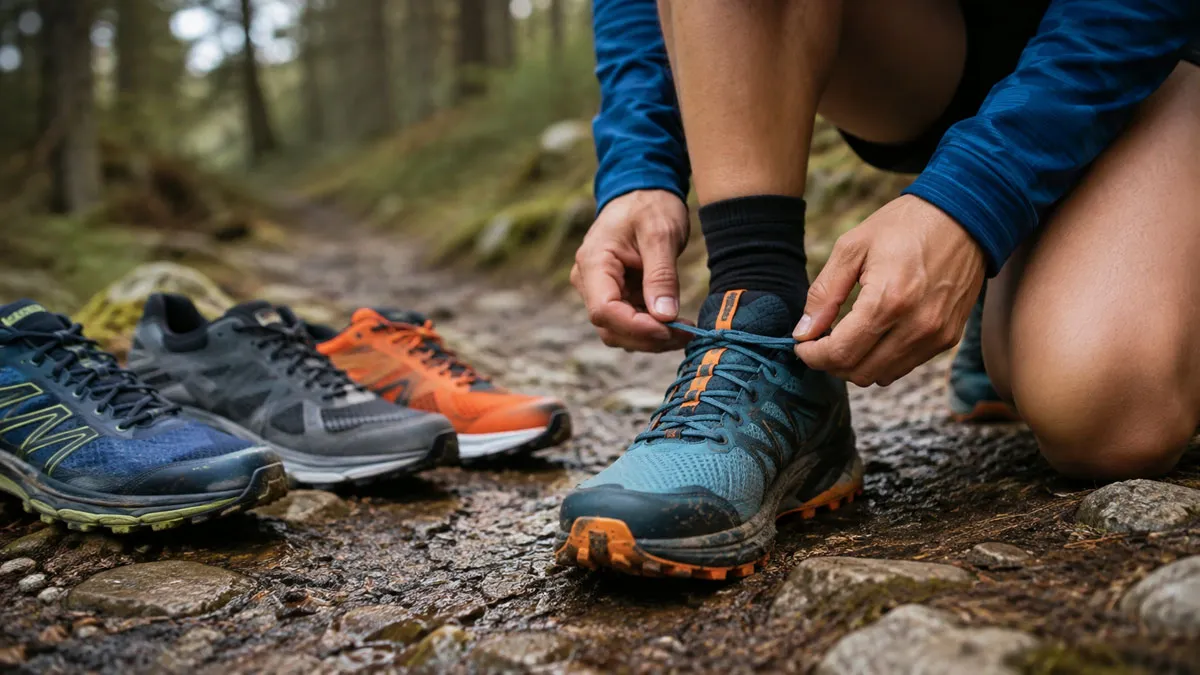
The right pair of running shoes should feel comfortable, fit securely, and suit the way you intend to use them. There is no single shoe that is ideal for every runner, because foot shape, running surface, distance, training habits, and personal comfort all differ. A practical approach is to focus first on fit and comfort, then consider cushioning, stability, construction, and the type of running you do.
A well-chosen shoe can help reduce unnecessary pressure and friction on the feet. However, footwear is only one part of comfortable running. Training load, running surface, recovery, and existing foot or leg problems also affect how the body responds to running.
Start With Fit And Foot Comfort
Fit is one of the most important factors when comparing running shoes. A shoe should hold the foot securely without squeezing it. The toes should have enough room to move, while the heel should remain comfortably supported without excessive slipping.
The shape of the shoe matters as much as its stated size. People have different foot widths and shapes, so relying only on a familiar numerical size can be misleading. A suitable shoe should not create obvious pressure points, rubbing, or discomfort when walking and running.
- Make sure the toes can move freely.
- Check that the shoe does not press against the sides of the foot.
- Look for a secure but comfortable heel fit.
- Pay attention to seams or materials that may rub the skin.
- Judge the shoe by how it feels on your own feet rather than by its appearance or marketing claims.
Research-based German health information recommends footwear that provides sufficient room in length, width, and height and does not cause pressure. This principle is particularly important for people who are prone to foot irritation or pressure-related problems.
Match The Shoe To Your Running
Running shoes are designed for different uses. A person who mainly runs on paved roads has different practical requirements from someone who regularly runs on uneven trails. Likewise, a shoe intended for short training sessions may not feel the same during a long run.
| Running Situation | Useful Characteristics | Main Consideration |
|---|---|---|
| Road running | Comfortable cushioning and a secure fit | Repeated impact on relatively firm surfaces |
| Trail running | Secure fit and an outsole suited to the terrain | Uneven or changing surfaces |
| Short everyday runs | Comfort and easy movement | Overall versatility |
| Longer runs | Comfort, cushioning, and dependable fit | Maintaining comfort as running time increases |
The goal is not to select the shoe with the greatest number of technical features. It is to select a shoe whose construction fits the demands you actually place on it.
Consider Cushioning Without Assuming More Is Always Better
Cushioning changes how a shoe feels underfoot and can make running more comfortable, particularly when the feet are exposed to repeated impact. Health information from the German Institute for Quality and Efficiency in Health Care notes that comfortable shoes with a cushioning sole can reduce strain on the plantar fascia in people experiencing plantar fascia problems.
That does not mean maximum cushioning is automatically the best choice for every runner. Cushioning is a comfort and design characteristic, not a guarantee against injury. The most heavily cushioned shoe may feel less natural or less comfortable to one runner than a moderately cushioned alternative.
A useful rule is simple: choose the level of cushioning that feels comfortable and appropriate for your running environment rather than selecting it solely because a product description calls it superior.
Understand Stability And Support
Running shoes differ in how they guide and support the foot. Some designs emphasize a more neutral feel, while others incorporate features intended to provide additional stability.
Foot movement alone should not automatically determine which shoe you buy. Terms describing pronation or foot position can be useful when discussing an individual problem with a qualified professional, but they should not be treated as a universal shortcut for choosing footwear.
This is especially relevant because foot structure varies naturally. Flat feet, high arches, and other foot characteristics can occur without causing symptoms. For someone without a specific problem, comfort, fit, and intended use are sensible starting points.
Choose The Right Outsole For The Surface
The surface you run on should influence your choice. Road shoes are generally designed around relatively smooth, firm surfaces, whereas trail shoes are built with construction and outsoles intended for changing terrain.
If you regularly move between surfaces, consider where most of your running takes place. A versatile shoe can be practical for mixed use, but a specialized shoe may provide characteristics that are more appropriate when a particular surface dominates your training.
Surface also affects physical loading. German health information identifies hard running surfaces as one factor that can contribute to excessive strain in the foot in some circumstances. Increasing training load gradually is therefore important rather than expecting footwear alone to compensate for a sudden increase in running.
Do Not Ignore Existing Foot Problems
A shoe can improve comfort, but it should not be expected to correct an underlying medical condition. Persistent pain, recurring pressure points, numbness, or significant changes in the way you walk or run deserve attention beyond simply buying another pair of shoes.
For example, excessive or unusual loading of the foot can contribute to plantar fascia problems, and unsuitable footwear can add to pressure or discomfort. Research-based health information also emphasizes that comfortable, appropriately fitting footwear can be useful when managing certain foot conditions.
If a foot condition, deformity, or circulation or sensation problem is already present, footwear requirements can be more specific. In such circumstances, advice from a healthcare professional or appropriately qualified foot-care specialist can be more useful than relying on general shoe-selection rules.
Test The Shoe Before Committing
Walking around in a shoe provides useful information, but running places different demands on the feet. When possible, assess the shoe using movements that resemble your normal activity.
Pay attention to whether your toes remain comfortable, whether the heel stays secure, and whether any part of the upper presses or rubs. Comfort should remain consistent rather than disappearing after a few minutes of use.
It is also sensible to avoid making a major change in footwear and immediately pairing it with a large increase in running volume. Repeated or unfamiliar loading can contribute to tendon and foot problems, particularly when training is increased too quickly.
Common Mistakes To Avoid
Choosing running shoes becomes easier when a few common assumptions are removed from the process.
- Choosing by appearance: A visually attractive shoe may not match your foot shape or running needs.
- Buying an uncomfortable shoe because it is highly rated: General popularity cannot replace individual fit.
- Assuming maximum cushioning is always superior: Cushioning is a personal comfort and use consideration, not a universal measure of quality.
- Ignoring width: A shoe can have the correct length and still be too narrow.
- Expecting shoes to prevent every injury: Training load, recovery, running surface, and physical conditioning also matter.
- Running through persistent pain: Changing shoes may not address the underlying cause of recurring symptoms.
A Practical Selection Process
Rather than trying to identify the “best” running shoe in the abstract, narrow your options according to your own requirements.
- Identify where you normally run.
- Consider whether your runs are short, long, occasional, or frequent.
- Determine the width and general shape your feet need.
- Choose a cushioning level that feels comfortable for your intended use.
- Compare neutral and stability-oriented designs based on comfort and, when relevant, professional advice.
- Try the shoe with the socks you normally use for running.
- Reject any option that causes pressure, rubbing, instability, or persistent discomfort.
The most useful selection principle is therefore straightforward: the right running shoe is the one that fits your foot comfortably, suits your running environment, and feels appropriate for the way you use it. Technical features can help narrow the choices, but they should support these fundamentals rather than replace them.