
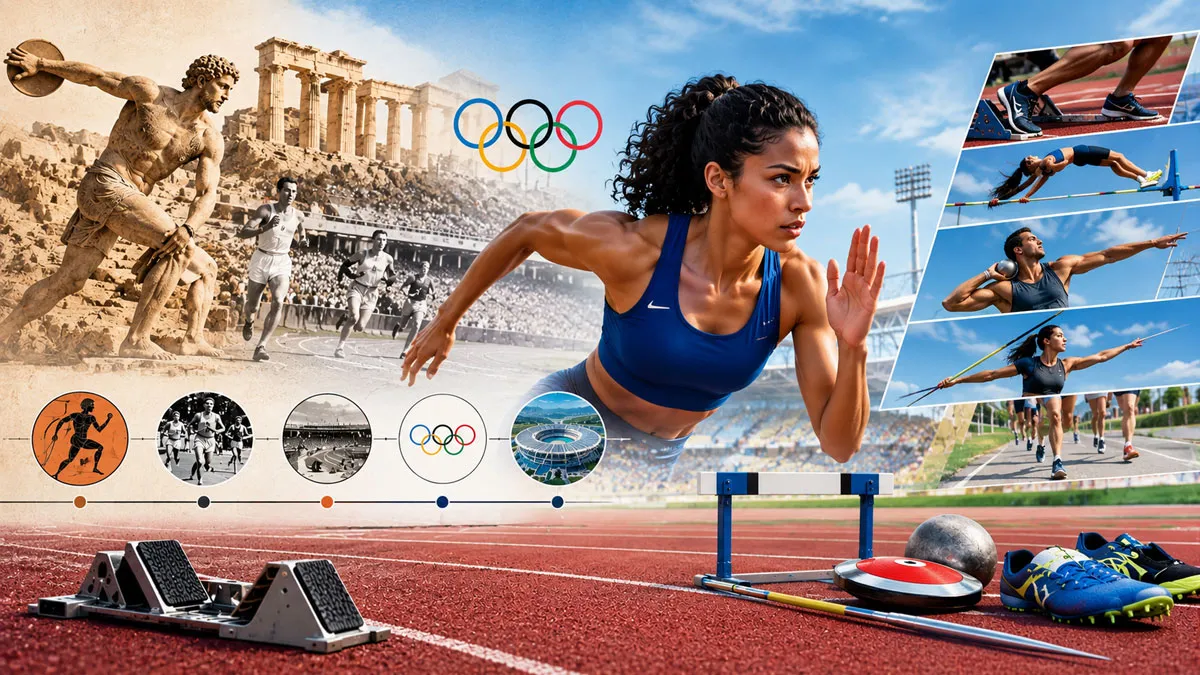
Athletics is one of the oldest organized forms of sport, built around movements that are fundamental to human activity: running, walking, jumping, and throwing. Although modern athletics is associated with carefully measured tracks, standardized equipment, international championships, and the Olympic Games, its roots extend deep into ancient civilizations. Over thousands of years, these basic physical skills developed from informal contests into a highly organized international sport.
Ancient Foundations Of Athletics
Competitive physical activity existed long before the modern concept of athletics. Historical evidence from ancient civilizations shows that running and other physical contests were practiced for recreation, training, ceremonies, and military purposes. In ancient Greece, these activities became especially important and were eventually incorporated into major religious festivals.
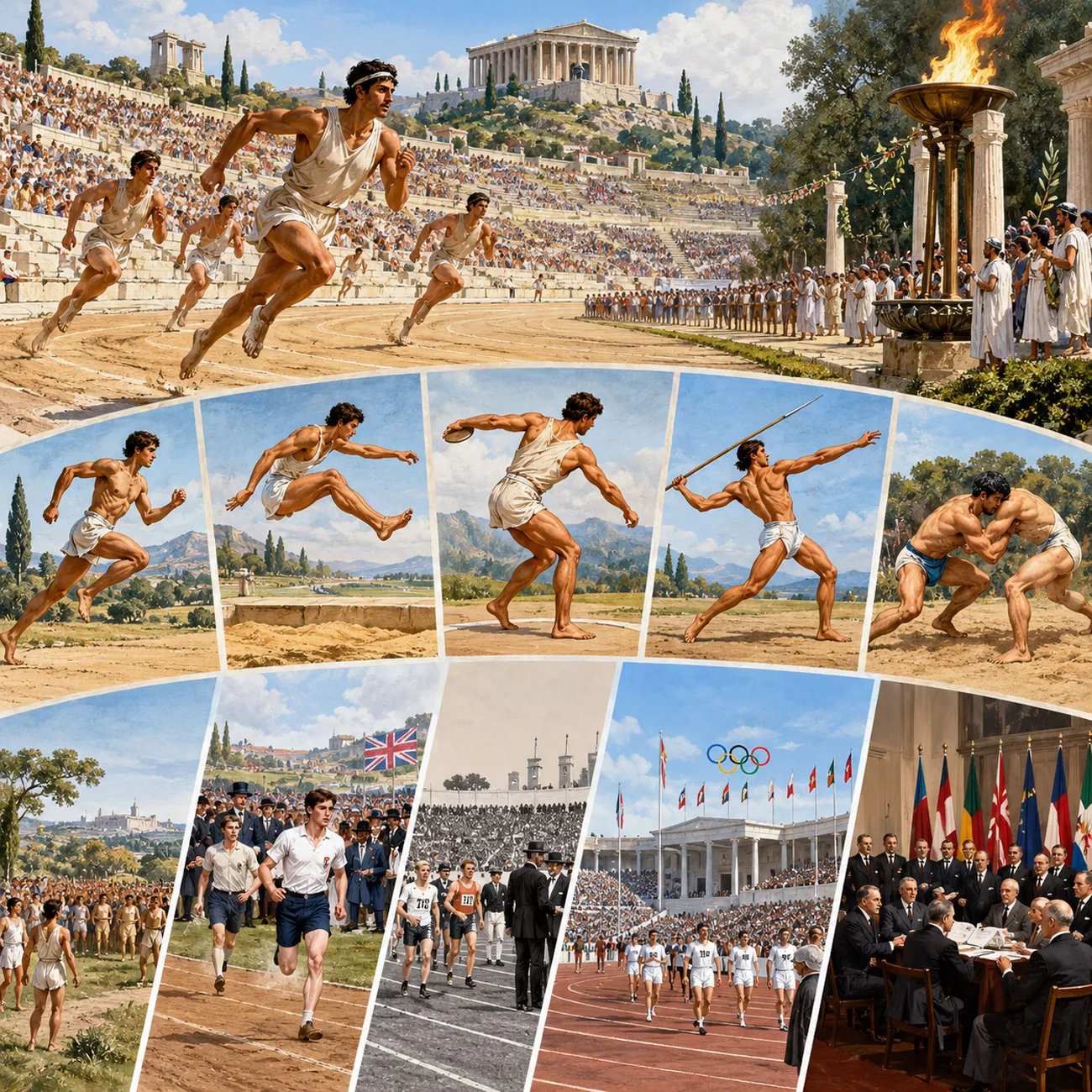
The ancient Olympic Games, traditionally dated from 776 BC, provide the most influential early chapter in athletics history. The earliest recorded Olympic event was the stadion race, a short foot race of roughly 192 meters. Over time, the Games included longer running events as well as jumping and throwing disciplines.
The ancient Greek pentathlon illustrates how closely athletics was connected with physical versatility. It combined a foot race, long jump, discus throwing, javelin throwing, and wrestling. Some ancient events differed considerably from their modern counterparts, but the basic emphasis on speed, strength, coordination, and endurance remains recognizable.
| Period | Important Development |
|---|---|
| Ancient Greece | Running, jumping, and throwing became established parts of major athletic festivals. |
| 18th–19th Centuries | Organized competitions increasingly developed in Britain, Europe, and North America. |
| Late 19th Century | Rules, clubs, championships, and standardized competitions began taking shape. |
| 1896 | Athletics became part of the first Olympic Games of the modern era in Athens. |
| 1912 | An international governing federation was established in Stockholm. |
From Ancient Games To The Modern Era
The ancient Olympic Games were abolished in late antiquity, and organized athletic traditions changed considerably during the centuries that followed. Running, jumping, throwing, walking, and other physical contests did not disappear, however. Different societies continued to organize local games and challenges, often according to their own customs.
In Britain, sporting contests gradually became more structured during the eighteenth and nineteenth centuries. Schools, universities, military organizations, and athletic clubs played an important role in turning individual physical contests into organized competitions. Educational institutions such as Rugby, Oxford, and Cambridge became particularly influential in the development of modern sporting culture.
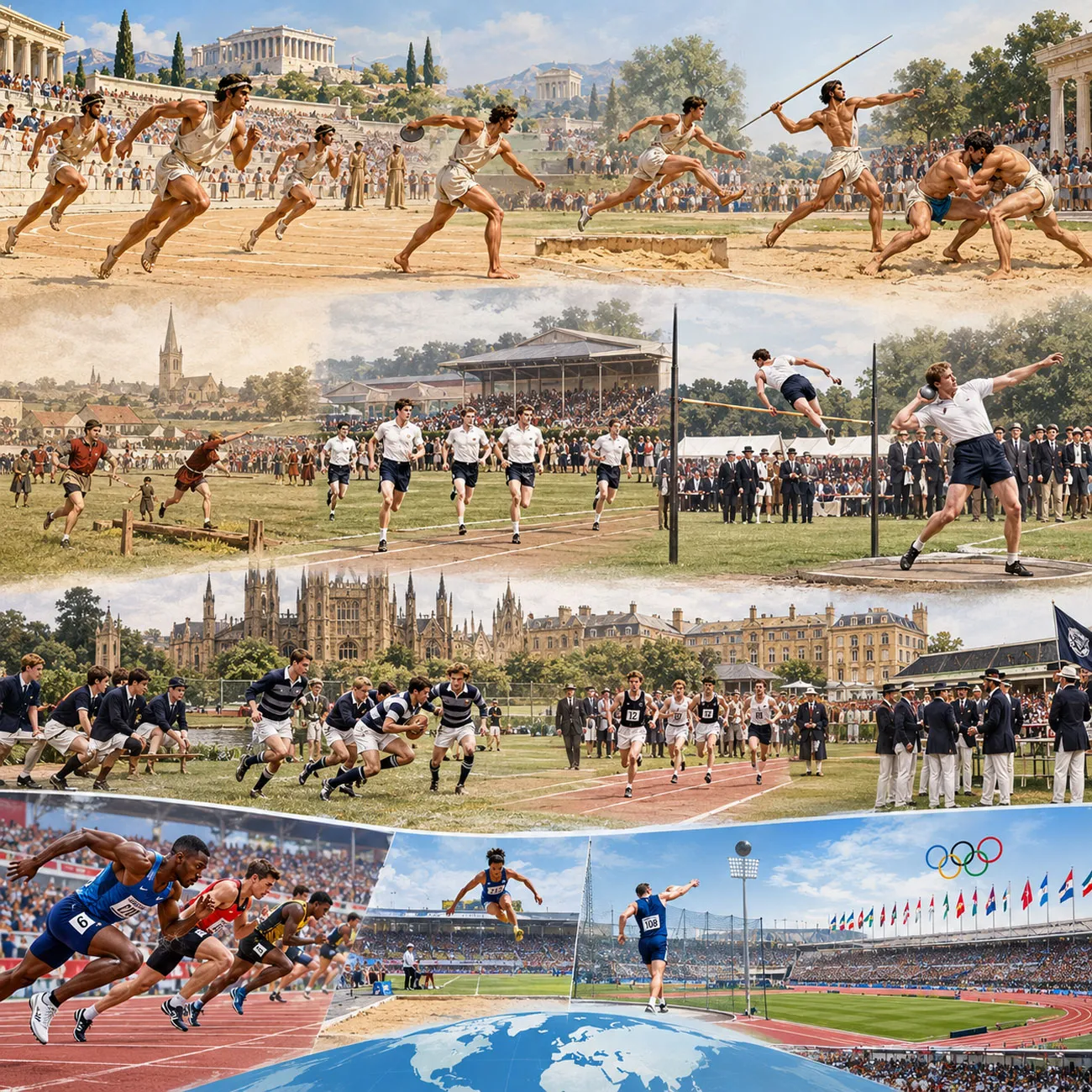
By the middle of the nineteenth century, athletics had begun to acquire characteristics that would be familiar today. Competitors increasingly raced over defined distances, jumping and throwing events were formalized, and clubs developed rules to make competitions more consistent.
The development was not limited to Britain. Organized athletics also expanded in Europe and North America. As sporting clubs and educational institutions grew, competitions became more frequent and increasingly open to participants from different communities.
The Rise Of Standardized Competition
One of the most important changes in athletics history was the move from locally determined contests toward standardized rules and measurements. Without common rules, performances from different competitions could not easily be compared. The growth of national championships and international meetings therefore created a need for organizations capable of coordinating the sport.
In England, the Amateur Athletic Association was established in 1880 and became an important early national governing organization. During the same period, athletics clubs and championships developed elsewhere, creating a broader competitive structure.
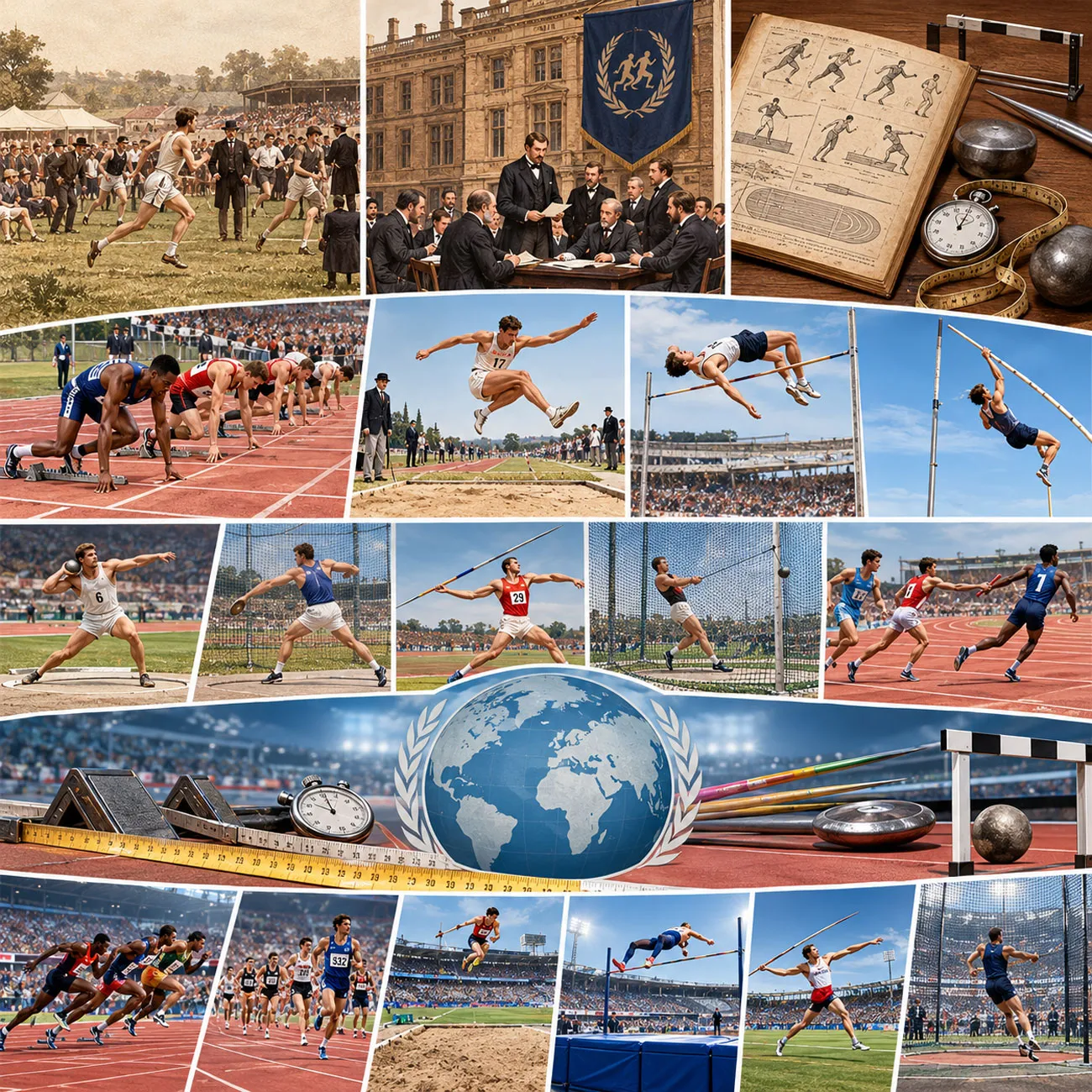
The events themselves also became more recognizable. Running competitions were divided into different distances, while field events developed established techniques and equipment. Relay racing, hurdling, long jump, high jump, pole vault, shot put, discus, javelin, and hammer throwing gradually formed part of the expanding athletics programme.
Why Standardization Mattered
Standardization changed athletics from a collection of local contests into a sport in which performances could be meaningfully compared. A measured distance, defined competition area, consistent equipment, and common rules allowed athletes from different places to compete under broadly similar conditions.
This process also made the concept of a world record possible. A performance could only be recognized internationally when there were agreed methods for measuring and validating it.
Athletics And The Modern Olympic Games
Athletics played a central role when the Olympic Games were revived in Athens in 1896. The modern Games were inspired in part by the sporting traditions of ancient Greece, although their organization and events were products of the modern era.
The athletics programme at Athens included running, jumping, throwing, and other events. James Connolly of the United States won the triple jump and became the first modern Olympic champion in athletics.
From the beginning of the modern Olympic movement, athletics occupied a prominent position. Its straightforward competitive structure made it particularly suitable for international competition: athletes could be judged through measurable distances, times, or heights.
The Olympic programme also helped athletics reach audiences far beyond the countries where organized competitions had first developed. International participation increased, and the sport became progressively more structured.
The Creation Of An International Governing Body
The rapid international growth of athletics created a practical need for common rules and official records. In 1912, representatives of 17 national athletics federations met in Stockholm and established the International Amateur Athletic Federation, later known as the International Association of Athletics Federations.
The organization was created to provide international governance, standardize competition, and maintain recognized records. This was a significant step because athletics was no longer simply a collection of national sporting traditions. It had become an international sport requiring coordination across borders.
Over the following decades, the governing organization developed competition regulations and technical standards while athletics continued to expand. Its name eventually changed to the International Association of Athletics Federations and, in 2019, to World Athletics.
The Development Of Women’s Athletics
The early development of organized athletics was heavily dominated by men, but women’s participation gradually expanded. Women competed in organized athletics before they were fully integrated into the Olympic programme, and separate organizations and competitions helped establish opportunities for female athletes.
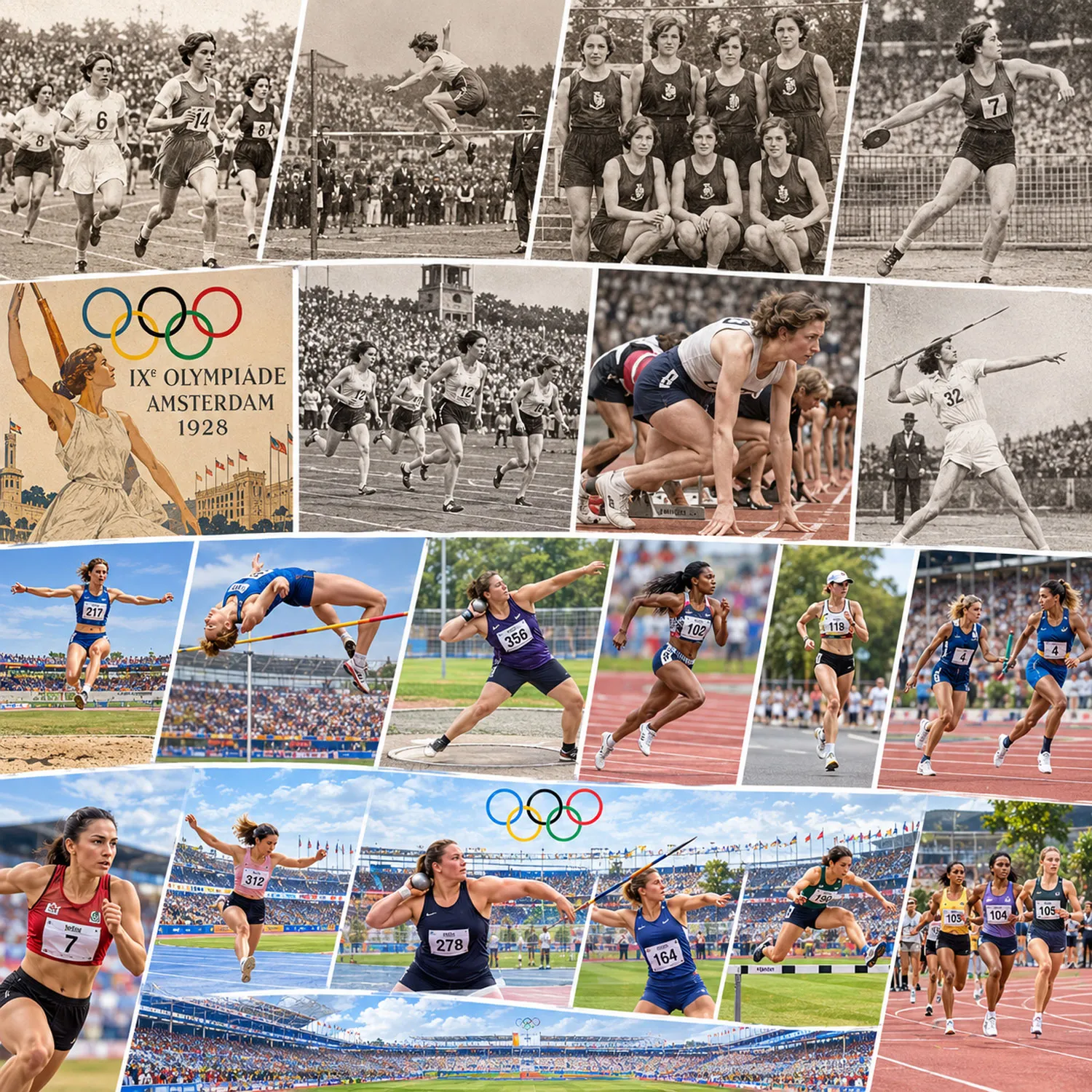
Women’s athletics entered the Olympic programme at the 1928 Amsterdam Games. The initial Olympic programme for women was considerably smaller than the men’s programme, but its inclusion represented an important institutional change.
Over subsequent decades, women’s participation expanded across running, jumping, throwing, walking, and combined events. The modern athletics programme now treats women’s and men’s competition as integral parts of the sport.
How Athletics Became A Broad Sporting Family
Modern athletics is not a single type of race. It is a collection of disciplines that test different combinations of speed, endurance, strength, coordination, and technical skill.
- Track events: Sprints, middle-distance races, long-distance races, hurdles, and relays.
- Field events: High jump, pole vault, long jump, triple jump, shot put, discus, hammer, and javelin.
- Combined events: Competitions requiring athletes to perform across several track and field disciplines.
- Road events: Competitive races conducted on roads, including longer-distance running.
- Race walking: A specialized discipline governed by technical requirements concerning the athlete’s movement.
The variety of events is one reason athletics has remained closely connected with the broader history of sport. Almost every discipline can be traced to a basic human physical capability, but modern competition has transformed those capabilities into highly specialized skills.
Technology, Training, And The Changing Sport
The history of athletics is also a history of changing training methods and equipment. Early competitors worked with comparatively simple facilities, while modern athletes benefit from carefully engineered tracks, specialized footwear, scientific training methods, performance analysis, and increasingly precise timing and measurement.
These developments have not changed the fundamental purpose of competition. Athletes still attempt to run faster, jump higher or farther, throw farther, or complete endurance events more effectively. What has changed is the precision with which performance can be trained, measured, and compared.
Rules have evolved alongside technology. International governing structures have had to establish standards for competition equipment, technical procedures, records, and athlete conduct. The result is a sport in which tiny differences in performance can be measured with remarkable precision.
Athletics In The Contemporary Sporting Tradition
Athletics has retained a distinctive place in international sport because its essential movements are universal. A child learning to run, jump, or throw is practicing the same fundamental movements that underpin elite competition, even though the technical level may be completely different.
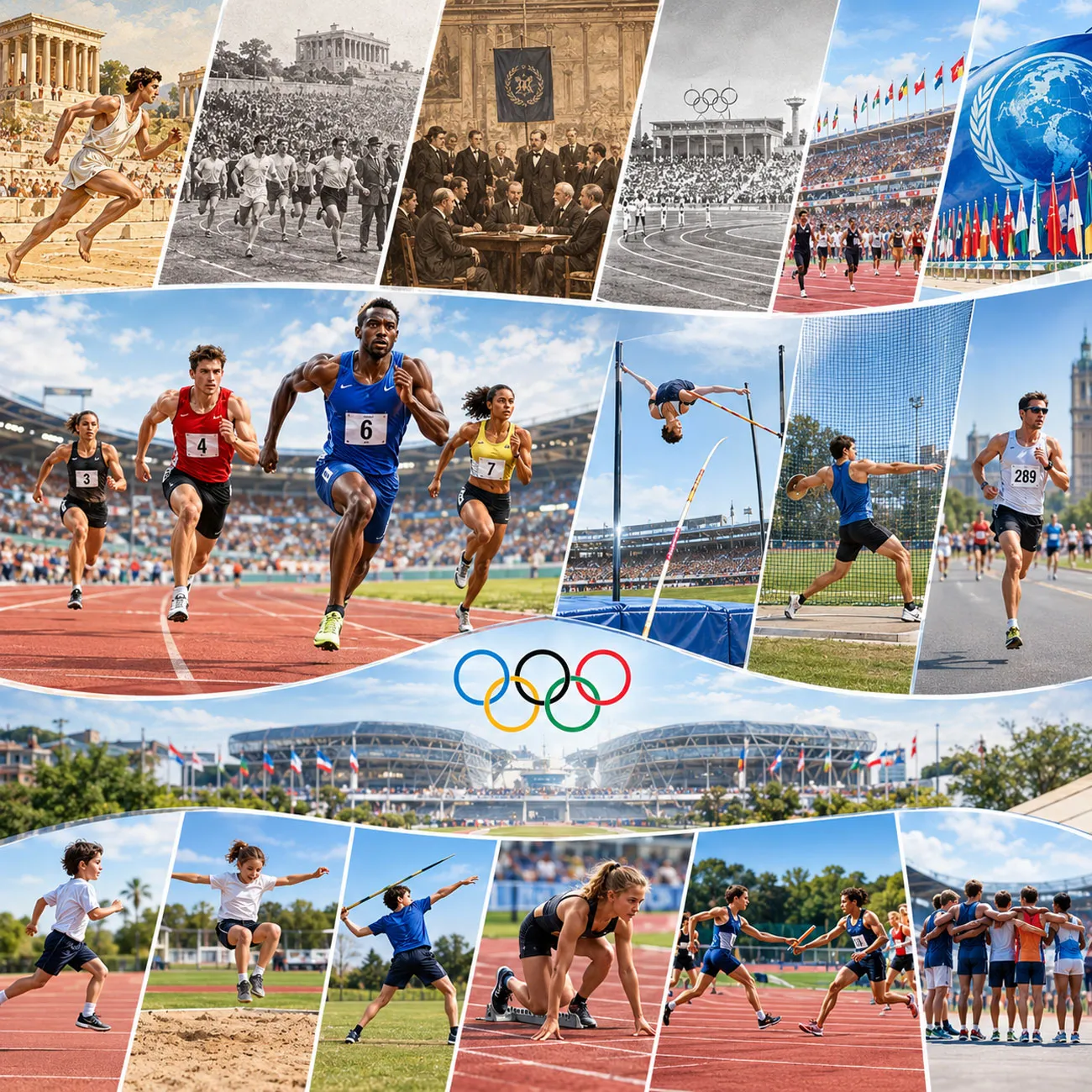
The sport’s history therefore connects several very different eras. Ancient competitions established enduring traditions of physical contest. British schools, universities, clubs, and other organizations helped shape modern competitive athletics during the nineteenth century. The Olympic revival gave the sport an international stage, while twentieth-century governing structures created common rules and recognized records.
Today, athletics encompasses both individual and team competition. A 100-meter sprinter, marathon runner, pole vaulter, discus thrower, and relay team may appear to compete in entirely different sports, yet all belong to the same broad tradition.
The Enduring Legacy Of Athletics
The history of athletics is ultimately a story of continuity as much as change. The equipment, facilities, training systems, regulations, and competitive structures have developed enormously, but the fundamental actions remain remarkably simple.
From ancient foot races to modern international championships, athletics has preserved a direct connection between human movement and sporting competition. Its long history explains why running, jumping, walking, and throwing remain among the most recognizable forms of physical competition in the world.
The sport has survived because its basic idea requires little explanation: measure human performance and see what can be achieved. Across different cultures and centuries, that principle has given athletics a lasting place in sporting history.