
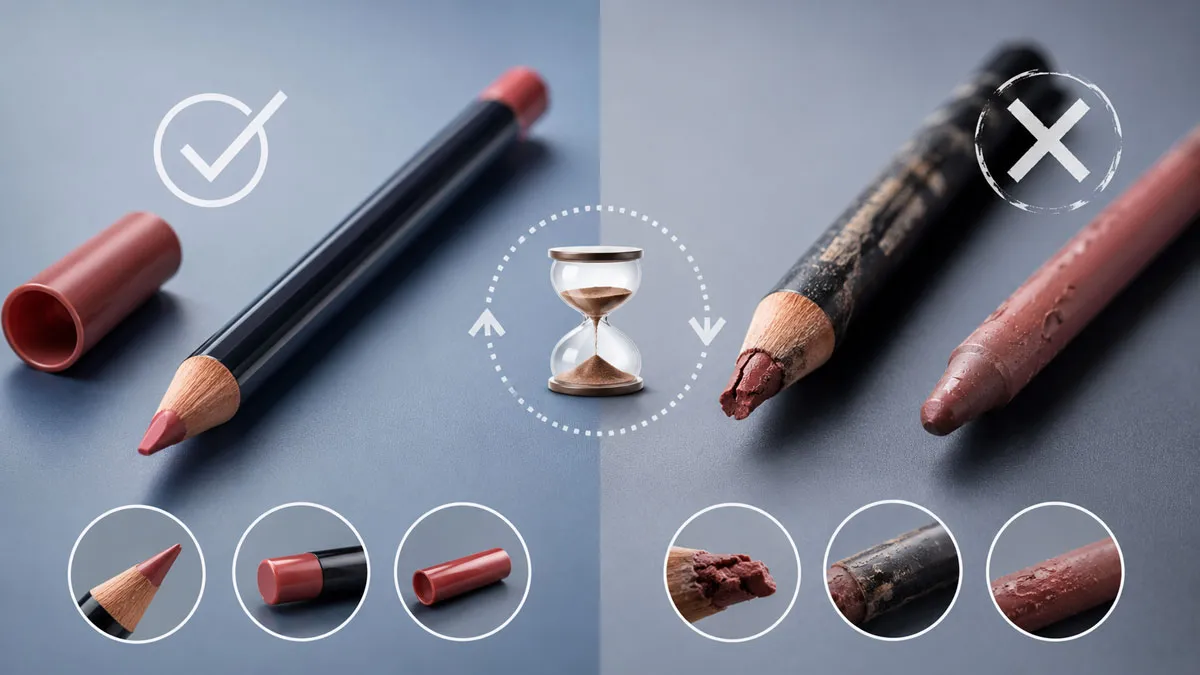
Like other makeup products, lip liner does not remain suitable for use indefinitely. Its formula can gradually change with age, repeated contact with the skin and lips, air exposure, moisture, heat, and contamination. A lip liner may not always have a clearly printed expiration date, so knowing how to read its packaging and recognize changes in the product is important.
The safest approach is to follow the manufacturer’s instructions, pay attention to any period-after-opening symbol, and discard the liner when its appearance, smell, texture, or performance changes noticeably.
How Long Does Lip Liner Last?
There is no single universal lifespan that applies to every lip liner. Cosmetic durability depends on the formula, packaging, storage conditions, and how the product is used. Some cosmetic products have a stated minimum durability date, while others use a period-after-opening indication instead.
The period-after-opening symbol is usually shown as an open cosmetic jar followed by a number and the letter “M.” For example, “12M” indicates a recommended period of use of 12 months after opening. This indication is particularly useful because the condition of a cosmetic can change after it has been exposed to air and repeated handling.
| Packaging Information | What It Means |
|---|---|
| Best-before or minimum-durability date | Indicates how long the unopened product is expected to remain suitable when stored as directed. |
| Open-jar symbol, such as 12M | Indicates the recommended period of use after the product is first opened. |
| No visible date or PAO symbol | Use the manufacturer’s instructions and assess the product for changes in smell, color, texture, or condition. |
How To Tell If Lip Liner Has Gone Bad
A product can become unsuitable before you notice an obvious expiration date. Changes in the product itself can therefore be important warning signs.
- A noticeable or unpleasant change in smell.
- A significant change in color.
- A texture that has become unusually dry, hard, crumbly, oily, or uneven.
- Unexpected changes in how smoothly the liner applies.
- Visible foreign material, dirt, or other signs of contamination.
- Irritation or an unexpected reaction after application.
Cosmetic formulas can deteriorate because ingredients change over time. Preservatives can also lose effectiveness, while exposure to moisture, air, heat, and repeated handling can contribute to product deterioration or contamination. For that reason, an obvious change in the product is a reason to stop using it, even if it still appears relatively new.
Why Storage Matters
How a lip liner is stored can affect how well it remains usable. Excessive heat, moisture, sunlight, and repeated exposure to air can accelerate changes in cosmetic products.
Keeping the liner properly closed and storing it in a cool, dry environment helps protect the formula. A hot car, direct sunlight, or a consistently humid location is less suitable for long-term cosmetic storage.
Good Storage Habits
- Keep the cap firmly closed when the liner is not being used.
- Store it away from excessive heat and direct sunlight.
- Keep the product clean and avoid unnecessary contact with dirty surfaces.
- Do not share lip liner with other people.
- Follow any storage instructions provided by the manufacturer.
What About Sharpenable Lip Liners?
Sharpenable pencils can be cleaned at the tip by removing part of the exposed material, but sharpening does not reset the product’s age or guarantee that the remaining formula is still suitable for use.
A sharpener can also become contaminated if it is not kept clean. The condition of both the pencil and the tools used with it should therefore be considered when deciding whether an older product should continue to be used.
Can You Use Lip Liner After Its Recommended Period?
The recommended period should be treated as an important safety and quality guideline rather than something to ignore simply because the product looks normal. Cosmetic manufacturers establish durability based on the characteristics of their particular formulas and packaging.
Once the indicated period has passed, or when the product shows signs of deterioration, replacing it is the more cautious choice. There is little benefit in continuing to use an old lip product when its condition can no longer be reliably assessed.
Does Lip Liner Need To Be Thrown Away After An Illness?
Cosmetics that come into contact with the mouth or surrounding skin can be exposed to microorganisms during use. Sharing makeup also creates an opportunity for microorganisms to pass between people.
If a lip liner becomes visibly contaminated, develops an unusual smell or appearance, or causes irritation, it should no longer be used. Keeping cosmetic products personal and clean reduces unnecessary contamination risks.
Can Expired Lip Liner Cause Irritation?
A deteriorated or contaminated cosmetic can cause an unwanted reaction. Irritation, redness, burning, or other unexpected symptoms after applying a product are reasons to stop using it.
If a reaction is persistent, severe, or concerning, medical advice should be sought. A cosmetic that repeatedly causes an unexpected reaction should not be used simply because it has not reached a printed date.
How To Decide Whether To Keep An Old Lip Liner
When the age of a lip liner is uncertain, consider several factors together rather than relying on appearance alone.
- Check the packaging for a minimum-durability date or period-after-opening symbol.
- Consider when the product was first opened.
- Inspect the color, texture, and smell.
- Consider whether it has been exposed to heat, moisture, or poor storage conditions.
- Discard it if there are signs of deterioration, contamination, or an unexpected reaction.
The key point is that there is no universal expiration period for every lip liner. The manufacturer’s labeling, the product’s condition, and its storage history all matter. When those factors indicate that the product may no longer be suitable, replacing it is the prudent option.