
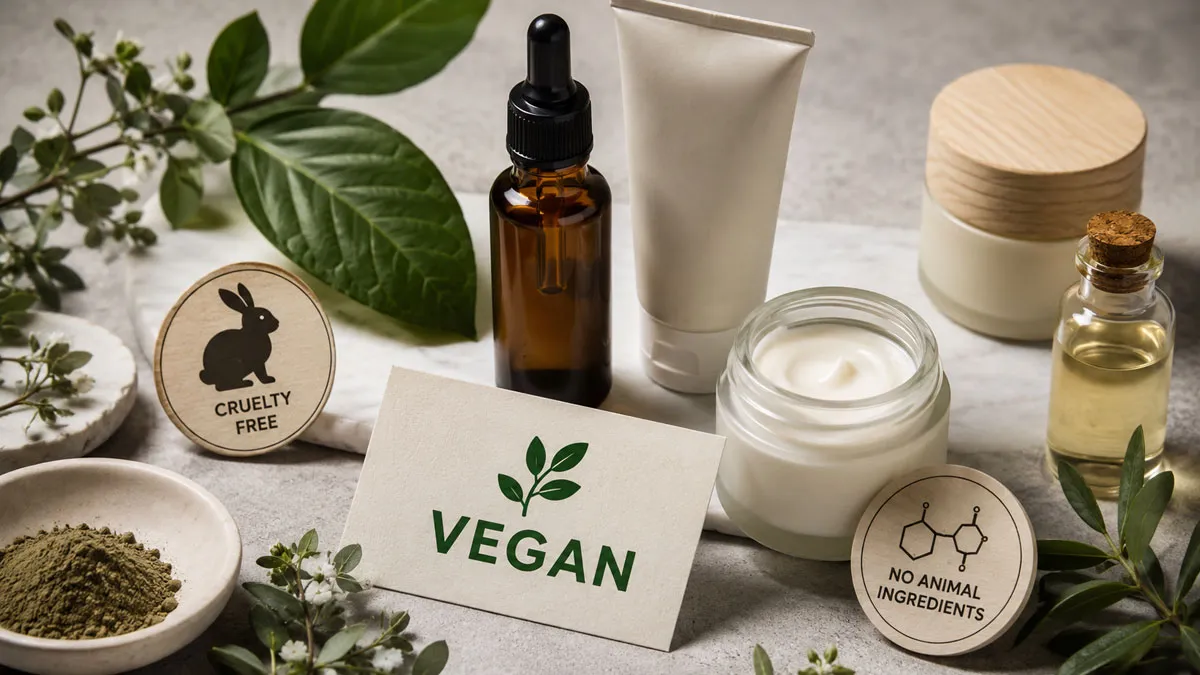
Vegan cosmetics are beauty and personal care products made without ingredients derived from animals or animal by-products. This can apply to makeup, skincare, haircare, fragrances, and other cosmetic products. Common animal-derived ingredients that may be avoided include beeswax, lanolin, carmine, gelatin, and certain forms of collagen.
The term describes the ingredients used in a product, but it does not automatically tell you whether the product is organic, natural, cruelty-free, or suitable for every skin type. These are separate characteristics, so understanding the differences can make product labels much easier to interpret.
What Makes A Cosmetic Vegan?
A cosmetic is generally considered vegan when its formulation contains no intentionally used animal-derived ingredients. Plant-based oils, botanical extracts, minerals, synthetic compounds, and laboratory-produced ingredients can all be used in vegan formulations.
Some ingredients can be difficult to identify because their names do not obviously indicate their origin. For example, an ingredient may have a technical or chemical name even though it can be obtained from either plant, animal, or synthetic sources. For this reason, checking the manufacturer’s ingredient information or a recognized certification can be useful.
Common Ingredients Avoided In Vegan Cosmetics
- Beeswax: commonly used to give balms, lip products, and creams a firm texture.
- Lanolin: a wax-like substance obtained from sheep’s wool and used as an emollient.
- Carmine: a red pigment traditionally produced from cochineal insects.
- Gelatin: an animal-derived protein that may appear in certain cosmetic formulas or capsules.
- Animal-derived collagen: used in some products designed to condition or moisturize the skin.
These ingredients may be replaced with alternatives such as plant waxes, botanical oils, mineral pigments, fermented ingredients, or laboratory-produced materials. The alternative depends on the function the original ingredient served in the formula.
Vegan Does Not Mean Cruelty-Free
One of the most common misunderstandings is treating vegan and cruelty-free as synonyms. They describe different aspects of a cosmetic product.
| Term | What It Refers To |
| Vegan | The product is made without animal-derived ingredients. |
| Cruelty-Free | Refers to whether the product or its ingredients were tested on animals under the relevant standard or certification. |
| Natural | Generally describes the origin or type of ingredients, but definitions vary by standard and market. |
| Organic | Refers to agricultural production and processing standards for qualifying ingredients or products. |
A product can therefore be vegan without being certified cruelty-free, just as a cruelty-free product may still contain animal-derived ingredients. A product can also be vegan, cruelty-free, natural, or organic in different combinations.
Why Do People Choose Vegan Cosmetics?
People choose vegan cosmetics for different reasons. Some want to avoid animal-derived materials for ethical or personal reasons, while others prefer formulations built around plant-based or synthetic alternatives.
However, vegan status alone does not determine whether a cosmetic is more effective, safer, gentler, or more environmentally friendly. A vegan formula can contain ingredients that are suitable for one person and irritating for another, just as conventional cosmetics can.
Potential Advantages
For consumers who specifically want to avoid animal-derived ingredients, vegan cosmetics provide a straightforward way to align product choices with those . Vegan formulations can also demonstrate how modern cosmetic chemistry can replace traditional animal-derived materials with other functional ingredients.
At the same time, the environmental impact of a cosmetic depends on much more than whether it is vegan. Ingredient sourcing, manufacturing, packaging, transportation, water use, and disposal can all affect a product’s overall environmental footprint.
How To Identify Vegan Cosmetics
The word “vegan” on packaging is useful, but it should not be the only factor considered when a precise ingredient standard matters to you. Look for clear ingredient information and, where relevant, a reputable vegan certification.
It is also important to distinguish a vegan claim from phrases such as “contains natural ingredients” or “plant-based.” These descriptions do not necessarily mean that every ingredient in the final product is free from animal-derived materials.
What To Check On The Label
- Read the full ingredient list rather than relying only on front-of-package marketing.
- Check whether the brand clearly defines what it means by “vegan.”
- Look for an independent certification when verification is important to you.
- When an ingredient has multiple possible sources, consult the manufacturer’s information.
Are Vegan Cosmetics Suitable For Everyone?
Vegan cosmetics can be suitable for many different skin and hair types, but vegan does not mean universally suitable. Skin compatibility depends on the complete formulation and the individual’s sensitivities, allergies, and .
For example, a vegan product can still contain fragrance, essential oils, preservatives, or other ingredients that may not work well for sensitive skin. Likewise, a non-vegan cosmetic can be well tolerated by someone with the same skin concerns.
As with any cosmetic, reviewing the ingredient list and following the product’s intended use are sensible steps. When trying an unfamiliar product, introducing it carefully can also help identify unwanted reactions.
Vegan Cosmetics In Everyday Beauty Routines
Vegan options are available across most major cosmetic categories, including cleansers, moisturizers, sunscreens, shampoos, conditioners, foundations, mascaras, lip products, and fragrances. The defining feature is not a particular texture, appearance, or performance level, but the absence of animal-derived ingredients in the formulation according to the product’s stated standard.
In simple terms, vegan cosmetics are cosmetics formulated without animal-derived ingredients. To understand what a particular product actually offers, it is helpful to consider its ingredients, certifications, testing claims, and suitability separately rather than assuming that one label explains everything.