
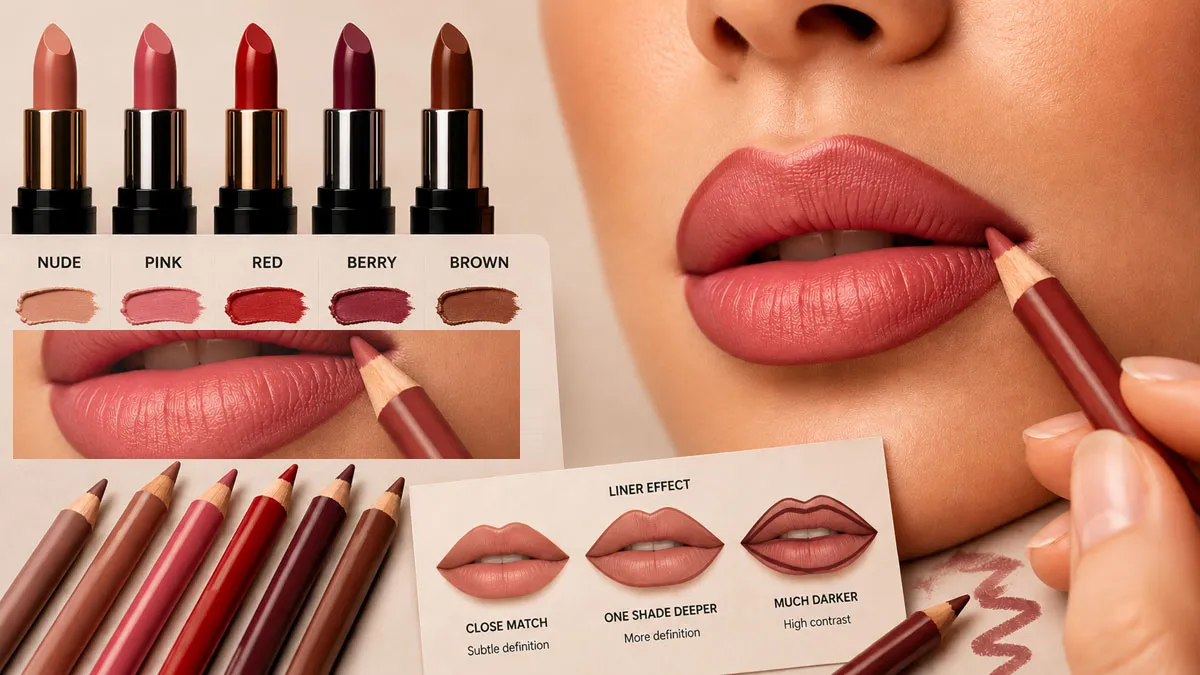
Choosing a lip liner does not have to mean finding an identical match for every lipstick. The right liner can define the lip shape, create a more seamless edge, add subtle dimension, and help keep lip color from moving beyond the natural lip line. While a closely matching shade is the simplest option, a slightly deeper or more neutral liner can also work well when the colors share a compatible undertone.
The best choice depends on the effect you want. A matching liner creates a polished, unified appearance, while a deeper liner can introduce definition and gentle contouring. The important point is that the liner should work with the lipstick rather than compete with it.
When Matching Lip Liner And Lipstick Makes Sense
A lip liner that closely matches the lipstick is the easiest approach when you want the outline to blend naturally into the rest of the lip color. This is particularly useful with highly pigmented shades, where a contrasting border can become very noticeable.
Matching shades are also practical when the goal is a clean, classic lip. The liner can define the edges before lipstick is applied, creating a continuous transition between the outline and the color inside the lips.
Matching does not necessarily mean the two products must be identical. A liner from the same general color family can provide a similar result, particularly when an exact shade is unavailable.
When A Slightly Darker Lip Liner Works Better
A liner that is somewhat deeper than the lipstick can add dimension without creating a sharply contrasting outline. Makeup guidance from established beauty brands commonly recommends using a liner that is close to the lipstick or slightly deeper when more definition is desired.
The difference should remain controlled. A very dark liner surrounding a much lighter lipstick produces strong contrast and makes the outline the main visual feature of the makeup. If that is not intentional, blending the liner inward can create a softer transition.
| Desired Effect | Lip Liner Approach | Result |
|---|---|---|
| Seamless and polished | Closely match the lipstick | Unified lip color with defined edges |
| Soft definition | Use a liner close to your natural lip color | Subtle structure that works with different lip colors |
| More dimension | Choose a slightly deeper shade in the same color family | Gentle contour and added depth |
| Deliberately contrasted look | Use a noticeably different shade | A more graphic or stylized appearance |
How Undertones Affect The Match
Color depth is only part of the equation. Undertone also affects whether a liner and lipstick look harmonious together.
Warm lip colors generally work naturally with warm liners, while cool lip colors tend to pair more easily with cool liners. For example, a warm coral or orange-red lipstick can be complemented by a warm-toned liner, whereas a mauve or blue-based red can be paired with a cooler liner.
A neutral liner can be useful when you wear several lipstick shades and do not want to purchase a separate pencil for each one. A shade close to your natural lip color can provide definition without strongly altering the color of the lipstick applied over it.
Should Lip Liner Have The Same Finish?
Color is not the only consideration. The finish and texture of the products can affect how cohesive the finished lip looks.
For a conventional, seamless result, pairing similar finishes is a straightforward choice. A matte liner with a matte lipstick creates a relatively uniform surface, while a liner with a satin or creamy texture can complement a smoother, more luminous lip color.
Different finishes can also be combined intentionally. For example, a defined liner underneath a glossy product can create contrast between a structured edge and a reflective center. In that case, the difference is part of the design rather than something that needs to be hidden.
Can You Use One Lip Liner With Multiple Lipsticks?
Yes. A liner does not have to be dedicated to one lipstick shade. A neutral or natural-looking pencil can be used with several lip colors when its depth and undertone remain compatible with them.
This approach can be especially useful for everyday makeup because the liner provides a consistent lip shape while the lipstick changes the overall color.
- Choose a liner close to your natural lip color for versatility.
- Choose a liner slightly deeper than your lipstick when you want more definition.
- Keep the undertones compatible when combining different shades.
- Blend the liner inward when you want a softer transition.
How To Apply Lip Liner With Lipstick
Good color selection becomes more effective when the liner is applied with control. A simple application can be built around the natural shape of the lips.
Define The Natural Lip Shape
Start at the center of the upper lip and work toward the corners using short, controlled strokes. Repeat on the lower lip, following the natural contour rather than trying to create an entirely new shape.
Blend For A Softer Result
If the liner is darker than the lipstick, gently blend some of the pencil toward the center of the lips. This reduces a harsh boundary and creates a gradual transition between the two shades.
Apply The Lipstick
Fill the lips with lipstick after defining the perimeter. Applying some liner across the lips can also create a more even base for the lipstick, depending on the products being used.
What If You Cannot Find An Exact Match?
An exact match is not essential. Start by looking for a liner with a similar undertone and a comparable depth. A natural lip-color liner is another useful alternative because it can define the mouth without introducing a strong competing color.
For an intentionally contoured appearance, a slightly deeper liner can be used instead. The transition will generally look more cohesive when the liner remains within the same broad color family as the lipstick.
The Simple Rule To Remember
Match the liner to the lipstick when you want a seamless look; choose a slightly deeper, compatible shade when you want more definition. An exact color match is therefore a useful option, not a strict requirement.
The most versatile approach is to consider three things together: the lipstick’s color, its undertone, and the amount of contrast you want around the lips. Once those elements work together, the liner can serve its practical purpose while also shaping the overall appearance of the makeup.