
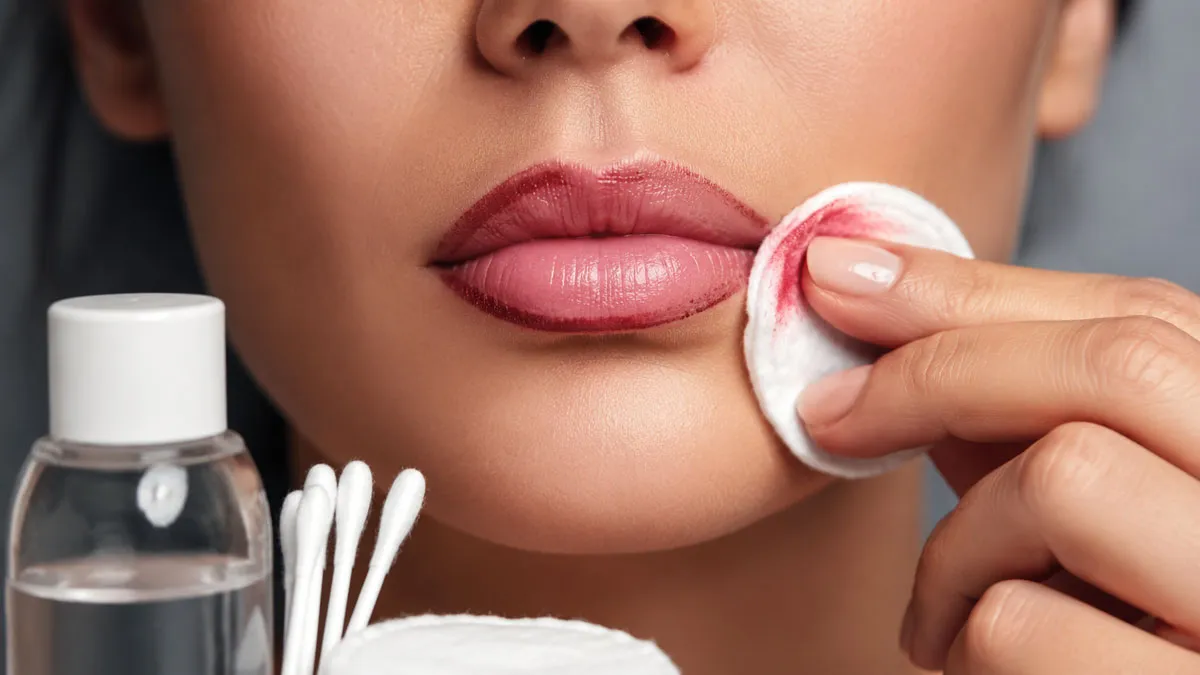
Removing lip liner does not require aggressive rubbing or complicated products. Because lip liner is designed to adhere to the delicate skin of the lips, the most effective approach is usually to soften the pigment first and then gently wipe it away. The right method also depends on whether you are removing a conventional pencil liner, a long-wearing formula, or liner that has been layered beneath other lip products.
The Easiest Way To Remove Lip Liner
Start with a gentle makeup remover, cleansing balm, or an oil-based cleanser suitable for use around the lips. Apply a small amount to a cotton pad or directly to the lips, then allow it to sit briefly. This gives the product time to loosen the waxes, oils, and pigments that help the liner stay in place.
- Apply a small amount of makeup remover or cleansing balm to the lip area.
- Leave it in place for several seconds rather than immediately rubbing.
- Gently wipe the liner away with a soft cotton pad or clean cloth.
- Repeat once if pigment remains instead of scrubbing harder.
- Clean the area with a mild facial cleanser if necessary.
- Finish with a simple lip moisturizer or balm if the lips feel dry.
The key principle is simple: use dissolution and gentle wiping rather than friction. This is particularly useful when removing highly pigmented or long-lasting liner.
How To Remove Stubborn Lip Liner
Some lip liners leave behind a visible stain even after the surface product has been removed. Long-wear and waterproof formulas can be especially resistant to water-based cleansing alone. In these cases, an oil-containing makeup remover or cleansing balm can help break down the remaining product.
Press the saturated cotton pad against the lips for a few seconds, then wipe gently. Avoid repeatedly dragging the pad across the lips. If a small amount of pigment remains around the edges, use a clean cotton swab with a little makeup remover to work precisely around the lip line.
When Water Alone Is Not Enough
Water-based products can remove some cosmetic residue, but they may not efficiently dissolve formulas containing waxes, oils, and other ingredients intended to improve adhesion. That is why a suitable makeup remover can work more effectively than plain water for persistent lip liner.
How To Remove Lip Liner Without Irritating Your Lips
The skin of the lips can become uncomfortable when exposed to repeated rubbing, harsh cleansers, or excessive exfoliation. Removing makeup should therefore be a gentle process rather than a test of how much pressure you can apply.
- Use a soft cotton pad or clean, smooth cloth.
- Give the remover enough time to loosen the makeup before wiping.
- Avoid vigorous scrubbing, especially when the lips are already dry.
- Do not pick at remaining pigment with your fingernails.
- Moisturize the lips after cleansing if they feel dry or tight.
Harsh household substances are also unnecessary. Products that are not intended for cosmetic use on the lips can cause irritation or accidental exposure to unsuitable ingredients.
Removing Lip Liner After Lipstick
If lip liner has been covered with lipstick or lip gloss, remove the lip products together rather than trying to erase the liner first. A cleansing balm or appropriate makeup remover can loosen the entire layer of cosmetics at once.
For particularly heavy makeup, apply the remover and allow it to dissolve the products before wiping. A second gentle pass is generally preferable to prolonged rubbing during one attempt.
What To Do If A Lip Liner Stain Remains
A faint tint can sometimes remain after the main cosmetic layer has been removed. This does not necessarily mean that more force is required. Pigments can temporarily leave color behind, particularly when a product is highly pigmented or designed for long wear.
Cleanse gently and give the lips time to return to their normal appearance. If necessary, repeat the makeup-removal process later rather than repeatedly scrubbing the same area.
Why Gentle Removal Matters
The goal of makeup removal is not simply to eliminate visible color. It is also to clean the area without unnecessarily damaging the skin barrier. Excessive friction can contribute to dryness, discomfort, and irritation, making the lips feel worse even after the makeup is gone.
A practical routine is therefore straightforward: loosen the product, wipe gently, cleanse any remaining residue, and moisturize when needed. This approach works for everyday lip liner removal while avoiding unnecessary steps and harsh treatment.