
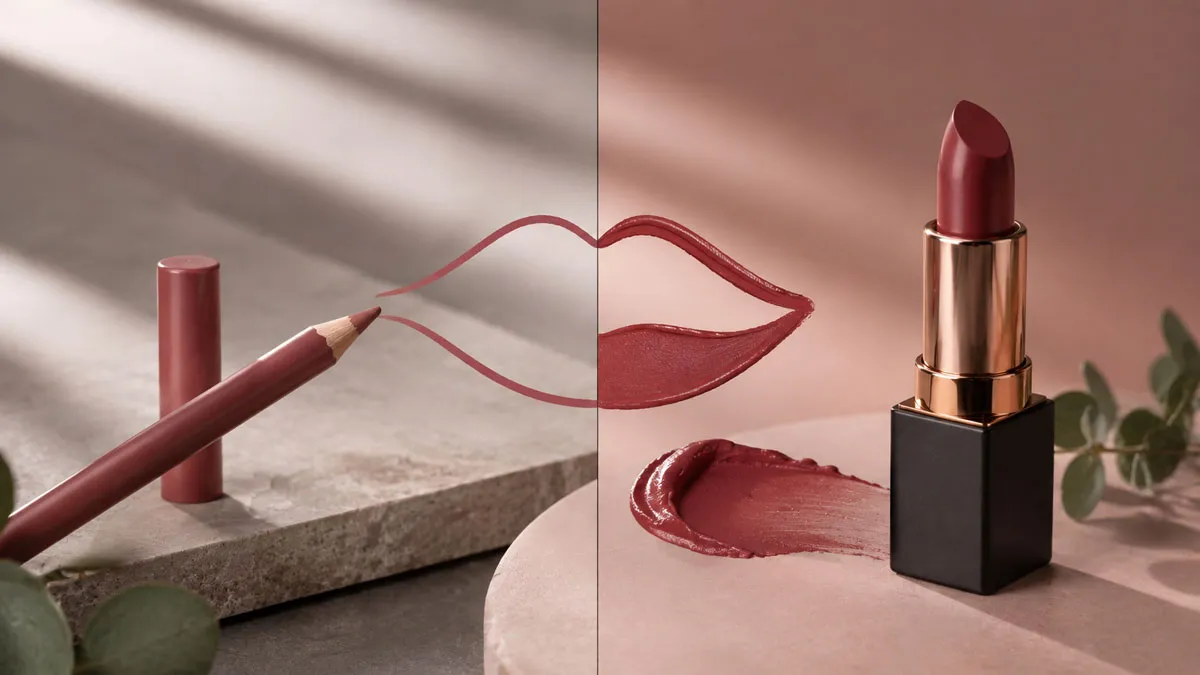
Lip liner and lipstick are both used to define and add color to the lips, but they serve different purposes. Lip liner is primarily designed to outline and shape the lips, while lipstick is mainly used to provide color, coverage, and a particular finish. Understanding the difference can make it easier to choose the right product and use each one effectively.
What Is Lip Liner?
Lip liner is a cosmetic product applied around the edges of the lips and, in some cases, across the entire lip surface. It usually comes in a pencil, retractable stick, or similar format and has a firmer texture than most lipsticks.
The main purpose of lip liner is to create a defined lip shape. It can also help lipstick appear more precise by creating a clean boundary between the lip color and the surrounding skin.
- Defines the lip shape: It can emphasize the natural contour of the lips.
- Creates a precise outline: A liner can make the edges of lipstick look cleaner.
- Can be used as a base: Applying liner over the lips can provide an additional layer of color.
- Helps coordinate lip colors: A liner can be matched with lipstick or used to create contrast.
What Is Lipstick?
Lipstick is a lip-color product designed primarily to add pigment and create a desired finish. Depending on its formula, it can leave the lips with a matte, satin, cream, glossy, or sheer appearance.
Unlike lip liner, lipstick is generally intended to cover a larger area of the lips. Its formula may also contain ingredients that give the product a creamy texture or help the lips feel comfortable during wear.
Key Differences Between Lip Liner And Lipstick
| Feature | Lip Liner | Lipstick |
| Main purpose | Defines and shapes the lips | Adds color and creates a finish |
| Typical texture | Firmer and more precise | Usually creamier or smoother |
| Application area | Usually the lip edges, but it can cover the lips | Generally the entire lip |
| Typical role | Definition and shaping | Color and overall appearance |
Can You Use Lip Liner Without Lipstick?
Yes. Lip liner does not have to be followed by lipstick. It can be applied on its own when you want a more defined, relatively understated lip look. Using liner across the entire lip can also create a more uniform result than using it only around the edges.
The finish depends on the particular liner. Some formulas have a creamy appearance, while others produce a more matte effect. A lip balm or another suitable lip product can be added if the liner feels dry.
Can You Use Lipstick Without Lip Liner?
Absolutely. Lip liner is optional rather than a required step. Lipstick can be applied directly to the lips, particularly when you prefer a softer or more effortless appearance.
For a more precise result, lipstick can be applied with a lip brush or carefully from the product itself. The need for liner often depends on the lipstick formula, color, desired definition, and personal .
How To Use Lip Liner And Lipstick Together
Using both products allows you to combine definition with full lip color. A simple routine is to start with clean, comfortable lips and then outline the natural lip contour with liner.
After defining the edges, fill in the lips lightly with the same liner or apply lipstick directly over it. This creates a layered look while keeping the lip color within the defined shape.
Choosing Matching Shades
A lip liner does not necessarily need to be an exact match for your lipstick. A similar shade can create a coordinated appearance, while a slightly deeper liner can create more visible definition. A neutral liner can also work with several lipstick shades.
When choosing between products, consider the result you want rather than treating either product as an essential part of every makeup routine. Lip liner focuses on definition, while lipstick focuses on color and finish.
Which Product Should You Use?
The choice depends on your preferred makeup style. If you mainly want to emphasize the outline of your lips or achieve a more precise application, lip liner may be useful. If your main goal is to add color, lipstick is the more direct choice.
You can also use both when you want defined edges combined with your preferred lipstick shade and finish. There is no requirement to use them together, so the simplest option is often the one that produces the appearance and comfort you prefer.